
I was called into the Anglican Church when I was 20. Bizarre as it may seem in an institutional church that can look in places like it is acclimatised to luxury, I had the sense that it was a calling into suffering. The calling became clearest in a lecture at the Divinity Faculty in Cambridge where the lecture was on Ezekiel 3. The prophet is sent to people who have the same speech as him, but have ‘hard foreheads and stubborn hearts’. God’s Almighty gift to Ezekiel to help him survive being a missionary to his own people is an even harder forehead.
For a young man who had headed back to university that summer intent on converting the evangelical Anglicans at the Round Church out of their troubled denomination and then heading overseas, this was a powerful passage. It was one of a string of encounters that summer that left me clear of my calling into Anglican ordained ministry. Kind and patient people I met on that journey included (future) Bishop Graham Kings, Archbishop Yong Ping Chung, Brian Stanley, (future) Bishop Sandy Millar, Bishop Simon Barrington Ward, and my especially patient college chaplain David Goodhew (who I had also tried to convert on my arrival). Each played a part in helping me make the transition from an excitable cocktail of FIEC/newfrontiers + holiness spirituality into the Anglican home I am now so glad to serve. It was a transition that gave me solid ground to build on when my life went into turmoil a year or so later.
One of the gifts of Anglicanism is that it embraces suffering. Cranmer’s theology is Reformation infused. Born in an era where suffering was usual and the 19th Century Hegellian optimism (‘things can only get better’) that drives postmillennial theology was 250 years into the future. That ‘postmillennial hope’ that things would keep getting better until Christ returned had a short shelf life, not much longer than the Victorian era. Its bubble was burst by the machine guns of WWI.
So Cranmer knew how to reach a people used to suffering.
- A liturgy that calls for trust and patience: ‘to comfort and succour all those who, in this transitory life, are in trouble, sorrow, need, sickness, or any other adversity.’
- A theology that suffering can help: it can humble us, make us aware of our sinfulness, deepen our dependence on God’s grace. It reorientates us to the hope of everlasting life, rather than earthly comfort.
- A mystery of Union with Christ in suffering: Christ does not necessarily remove the burdens of life, but carries them with believers, transforming suffering and giving it redemptive meaning and power.
- A preparation for Heaven through suffering: Earthly trials and suffering purge offenses and a preparation for the eternal reward in Heaven.
- An example of how suffering can impact others: Foxe’s Book of Martyrs, recall Cranmer initially recanting under extreme pressure, but then famously repenting of his weakness and embracing a martyr’s death. Cranmer declared: “As my hand offended, writing contrary to my heart, my hand shall first be punished”. He plunged his hand into the flames first. The manner of his death was very significant in the later adoption of most of his (then) 42 Articles and 1549/1552 Books of Common Prayer into the formularies all Bishops and Clergy still assent to.
But other theologies are available. In particular there are 1) postmillennial theologies where the world gets better and better through Christian influence as suffering decreases with progress and there is a peaceful millennium before Christ returns; and 2) premillennial theologies that say that the world will get far worse before Christ returns, but much of what is terrible will happen in a seven year period (the Tribulation) after the Christians get whisked away in a secret rapture. So those Christians don’t have to face most of the suffering either.
The idea of a secret Rapture of believers to escape suffering doesn’t fit (at all) into Revelation. It doesn’t fit its chronology, and it doesn’t fit the message to the seven churches that they need to hold on, endure and overcome. Those who want to make Jesus and Paul’s words in Mt 24 and 1 Cor 15/1 Thes 4 fit into a ‘secret rapture’ struggle to work out why it has been left out of Revelation. They have to ram that into Revelation 4:1 where John is told to ‘come up’ to receive his vision of the throne room of God. If you have been watching the Left Behind films or reading the books, and are getting scared that planes are about to fall out of the sky because the Christian pilot is raptured, you won’t find that particular horror story in Revelation.
But there is plenty we might be scared of. A dragon, a beast and a false prophet. And John was preparing the churches of Revelation to face them all.
The woman and the dragon
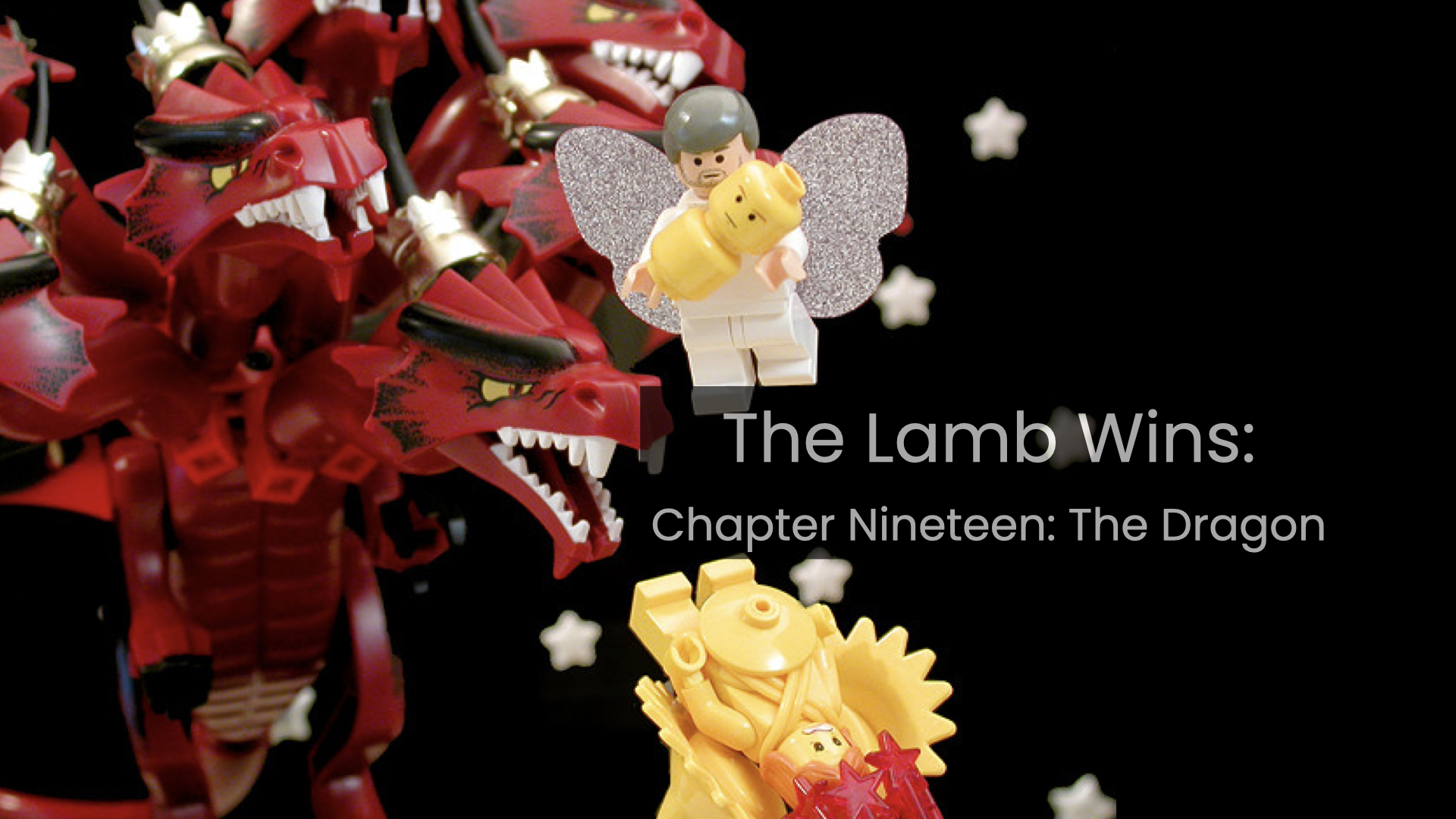
Revelation 12 takes us straight to a place of suffering: childbirth, and it introduces us to a Greek/Roman myth that the Ephesian church would have known well. It concerns the birth story of their goddess Artemis and her brother Apollo. It is about a giant dragon.
Python was a giant dragon who lived on Mount Parnassus. An oracle warned him that he would be killed by the child of Leto. When Python realised Leto was pregnant by Zeus, he chased her to try to kill her, but Zeus sent the North Wind to carry her safely to Poseidon, who hid her on the island of Ortygia under the sea. When Python could not find her, he returned home. Poseidon later raised the island, now called Delos, and there Leto gave birth to Apollo and Artemis. Later Apollo went to Parnassus and killed Python with his arrows to protect his mother from her adversary.
A few years ago I heard Ian Paul talk on this passage. He began with some quotes from well-known fairy tales, and found the audience could finish them all off:
‘Snow White and the…’ ‘ …seven dwarfs’ | ‘Little Red Riding…’ ‘…Hood’.
These stories are part of our story.
In the same ways the seven churches of Revelation could have finished the ‘Leto gave birth to…’ They knew where the story was going.
Ian Paul puts it like this:
Emperors, particularly Domitian, told this story, putting themselves in the role of Apollo, the slayer of the chaos-monster Python, insisting that coming into the fold of the Empire, and doing obeisance to the emperor, was the only way to peace and prosperity. But John inverts this; by associating the beasts, the successive imperial powers from Daniel 7, with the dragon, and the promised ‘male child’ of Jesus with Apollo, he shows how the demands of imperial loyalty usurp the place of God, and raises the stakes for all followers of Jesus.
So in Ian Paul’s account Revelation 12 is a theological flashback to the birth of Christ. The woman is both the mother of Jesus and because she continues to exist, suffer persecution, and represent a community long after the child’s ascension she is also the mother Church – Israel fulfilled and extended in the people of God.
The dragon is the ‘ancient serpent, who is called the devil and Satan’ (Rev. 12:9). Not Rome, not a human ruler, but personal evil operating behind human systems.
The thing that has blessed me most from these verses is that account of war in heaven where the dragon gets thrown down.
The dragon (satan) fails to destroy the child and is cast out of heaven not by Jesus himself, nor by Father God. It only takes an Archangel to defeat him. There is no dualism here. Satan is not even close to sharing the power God has. His authority is limited and temporary. His ongoing war against the woman and her offspring is therefore the outworking of a lost battle, not a contest of equals.
The Lamb Who Was Slain Wins (without having to lift a further hoof).
This is the central message of the Book of Revelation. The world is not as God intended; it is ruled by malevolent forces, and as a result it is beset with all kinds of suffering, from disease and famine to war and disaster. What is God doing about it? He has sent his Son, suffering as a sacrificial lamb who has been slain, but has been raised to life and now standing in the place of power and authority, to redeem not just ethnic Israel but a new Israel from ‘every nation, tribe, people and language’ [Ian Paul]
Suffering may still come our way. In fact it will still come our way. The dragon who was hurled to earth is now raging war against the children of mother Church:
When the dragon saw that he had been hurled to the earth, he pursued the woman who had given birth to the male child. The woman was given the two wings of a great eagle, so that she might fly to the place prepared for her in the wilderness, where she would be taken care of for a time, times and half a time, out of the serpent’s reach. Then from his mouth the serpent spewed water like a river, to overtake the woman and sweep her away with the torrent. But the earth helped the woman by opening its mouth and swallowing the river that the dragon had spewed out of his mouth. Then the dragon was enraged at the woman and went off to wage war against the rest of her offspring—those who keep God’s commands and hold fast their testimony about Jesus. [Rev 12:13-17]
But, as we shall see, he is not going to win!
So stand firm, persevere, hold on, endure, overcome. There is no secret rapture to whisk you away, so get Cranmer’s prayer book out, become an Anglican(!) and learn that in suffering there is liturgy, theology, mystery, preparation and example that can help us all.
Read More in this Series
The Lamb Wins Whole Series Catch Up : Introduction: Chp 1: Hope is Here | Chp 2: First, Love: Ephesus | Chp 3: Fear Not: Smyrna | Chp 4: I Know: Pergamum | Chp 5: Tolerate This: Thyatira | Chp 6: Wake Up: Sardis | Chp 7: Hold On: Philadelphia | Chp 8: Knock, Knock: Laodecia | Chp 9: What Must Soon Take Place | Chp 10: Holy Forever | Chp 11: Most Blessed | Chp 12: One That Was Slain | Chp 13: Come Home | Chp 14: Sun Forbear to Shine | Chp 15: 144000 | Chp 16 Sound of Silence | Chp 17: Spiralling Down | Chp 18 Two Witnesses | Chp 19 The Rapture | Chp 20 The Beast
Subscribe Below
If you have enjoyed this post why not check out somauk.org/stories and maybe even pay it forward by sharing the post and maybe take a moment to bless a brilliant charity? SOMA UK relies of the generosity of churches and supporters to fulfil our marvellous ministry – encountering God globally. Every donation goes a long way.
To support our ministry it’s www.somauk.org/donate
 Your name is like honey