
This morning I visited Durham Cathedral with my daughter for morning prayer. A place of pilgrimage for many. Some as a visit to one of the filming sites of the Harry Potter franchise. Others to remember their graduation day. But still others come to visit the tombs of Cuthbert and Hilda as a place of prayer. Cuthbert and Hilda were two exceptional witnesses to the Christian faith on these Islands from the 7th Century. But, as far as I know, none of the pilgrims or Chapter were expecting Cuthbert or HIlda to turn up to the service today.
Contrast that with 1st Century Jewish expectations about two of their great saints. Centuries after Moses and Elijah walked the earth there were genuine hopes that they would return. Malachi puts them both together in his prophecy about the Day of the Lord.
Remember the Torah of Moses My servant, even the statutes and ordinances which I commanded him in Horeb for all Israel. Behold, I am going to send you Elijah the prophet before the coming of the great and terrible day of the LORD. (Malachi 4:4–5)
Even more explicitly the Midrash Rabbah (‘Great Midrash’) pairs Moses and Elijah as heralds of the Messiah:
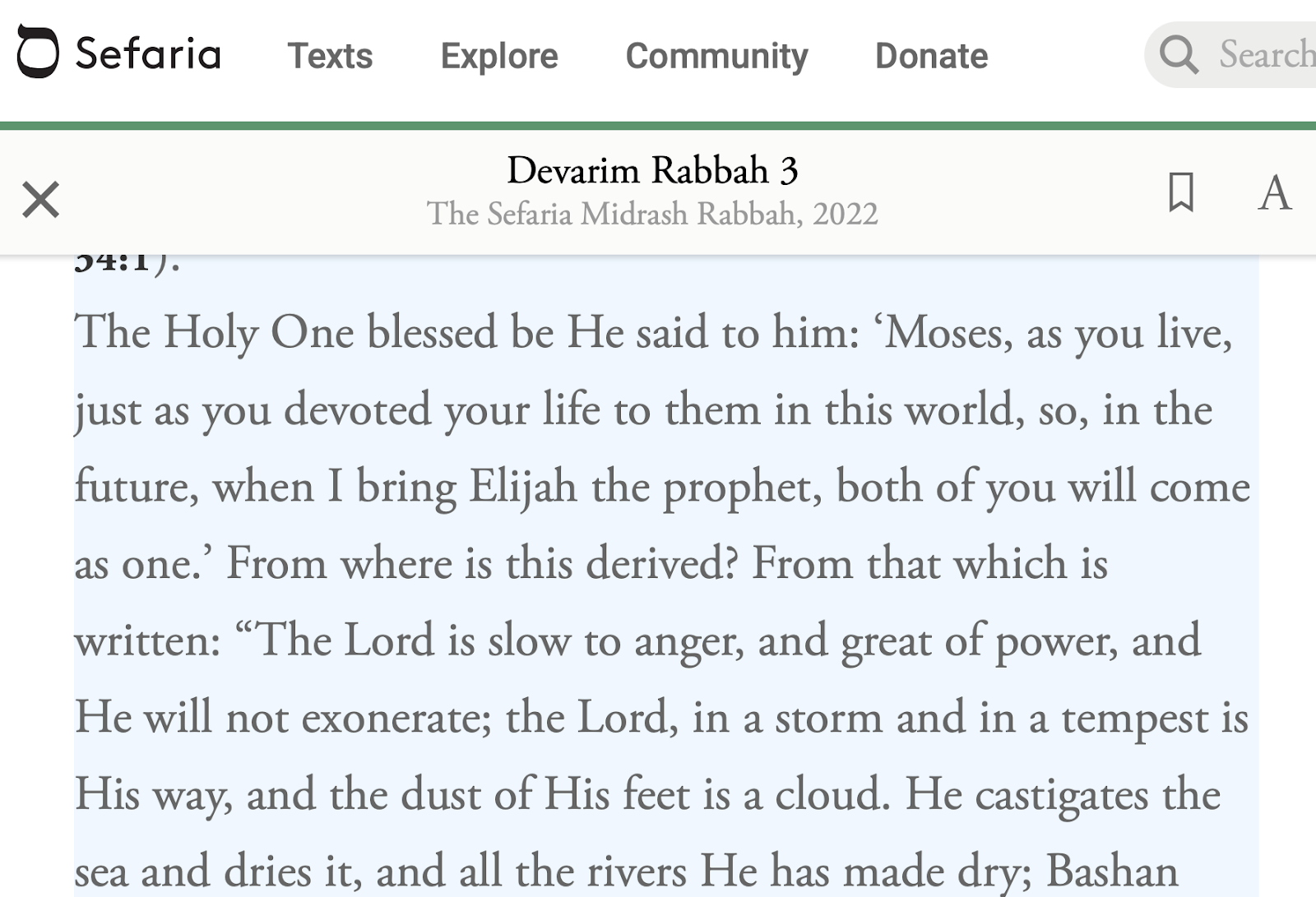
The Holy One, blessed be He, said to Moses: ‘Moses, by your life, just as you have devoted your life to them in this world, so in the future to come, when I bring them the prophet Elijah, both of you will come as one. (Devarim Rabbah 3).
There were both men who in their lifetimes climbed Mount Sinai, heard God speak and had very strange deaths. They were also imperfect men.
As I have been thinking about their ministry there has been another Channel 4 news special on the TV. Following Cathy Newman’s expose of the John Smyth debacle (see Chapter Twelve: One that was Slain), our next Archbishop, Dame Sarah Mullaly has come into her crosshairs as well. The issue is rather different, concerning a man who was a Roman Catholic priest at the time of Bishop Sarah’s appointment to London, who had very sadly contracted HIV. He had left the Church of England due to his objections to women bishops.
Father Alan Griffin committed suicide after his name appeared in a dossier compiled by a retrobate Chief of Staff, Martin Sergeant which was given to Bishop Sarah. Sergeant was himself a gambler and had embezzled Church funds on a grand scale, as well as covering up a previous criminal conviction. He was one of those swept out by the new broom not long after Bishop Sarah started. The dossier he passed to Bishop Sarah featured more than 40 priests whose characters were called into question for everything from safeguarding/criminal reasons to malicious and unfounded gossip.
When Griffin discovered he was accused of sex with underaged men and paying prostitutes, the now Catholic priest committed what his new denomination would consider a mortal sin. (Suicide is always a ‘grave matter’ for Catholics but normally considered a mortal sin for someone like a priest who would know the ‘full gravity of the sinfulness of that act’). Damned if he did, to escape feeling damned if he didn’t, by Martin Sargeant’s dossier. The coroner vindicated him entirely of all wrongdoing and staged an emergency intervention to prevent other troubled clerics following Griffin’s path.
Both for her handling of this case, and that of another priest, Bishop Sarah has come under the scrutiny of Cathy Newman, who now has a track record of toppling an Archbishop, and came close to unsettling Archbishop Stephen Cotterell as well at the beginning of 2025.
In January 2025 Newman revealed a claim that Stephen Cottrell and Steve Croft, put pressure on some committee members to overturn a vote that had failed to appoint Cottrell’s preferred candidate Bishop Dr John Perumbalath to be the new Bishop of Liverpool. What was doubly troubling was the report that a key reason for resisting the appointment was that Perumbalath had failed a safeguarding question. When Perumbalalth was then accused of sexual harassment by another Bishop colleague, the Archbishop of York came across as a bully who hid behind procedure to isolate the accuser and protect Perumbalath. However Cottrell survived, partly on the basis that with Welby gone we needed at least one Archbishop.
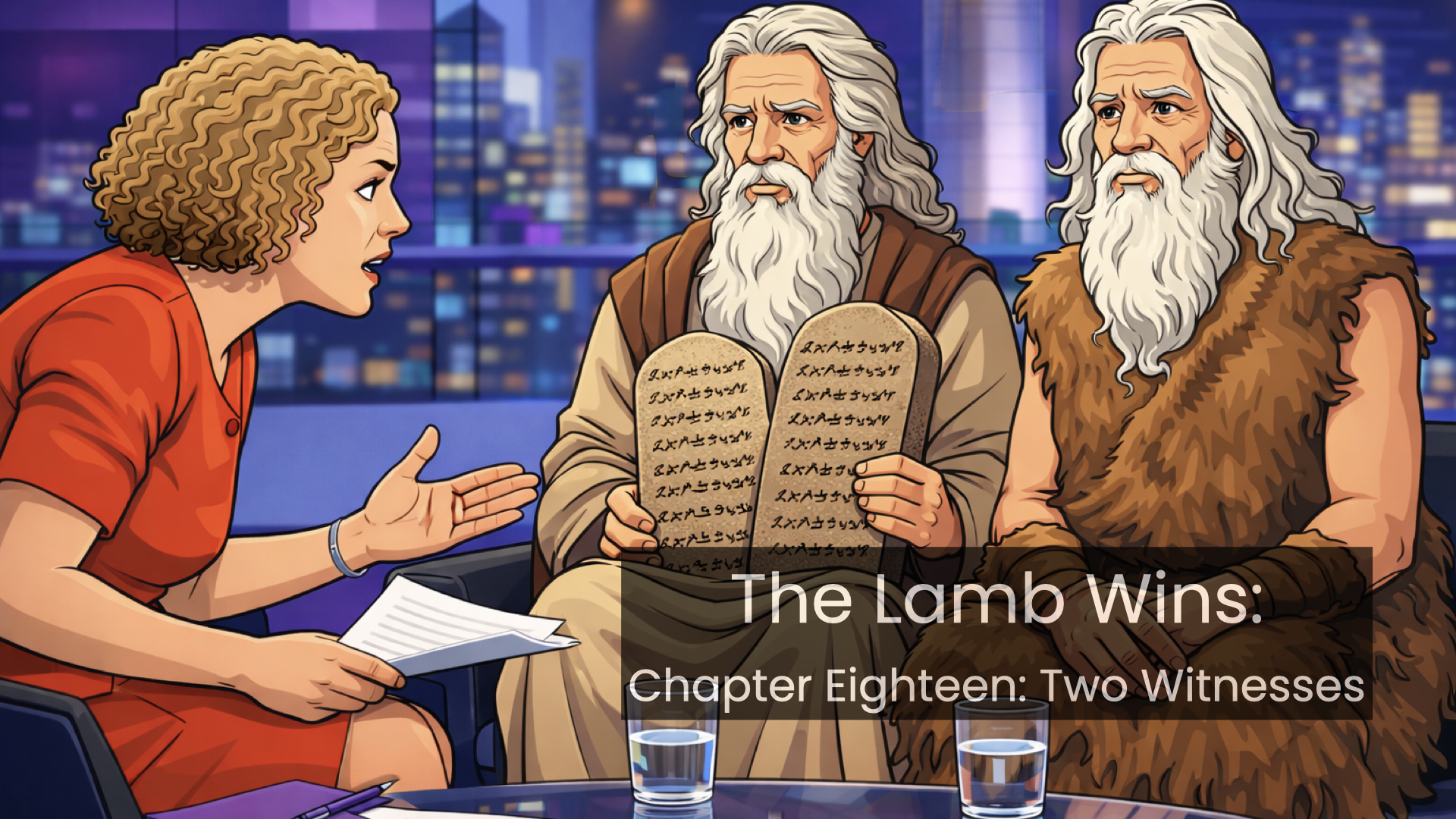
Now Cottrell is the man Mullaly has had to refer herself to for a decision on whether she has a case to answer on her safeguarding record. Cottrell and Mullally are the two most preeminent witnesses of the current Church of England, but it can be little surprise that a newshound like Cathy Newman smells a bit of blood in the water.
I’m sure Cuthbert and Hilda had their quirks. Personality issues, and ‘strong’ leadership styles may have been masked by some of their miracles and administrative gifts. Probably they were relieved that Synods like Whitby were not conducted in the glare of the Anglican twiteratti or mainstream media.
We know Moses and Elijah had their quirks too. Their quirks were pretty serious. Both the ones God focused on and the ones that get recorded without comment. Moses was told he would not enter the promised land because of performing a miracle (in the wrong way). That’s the sort of judgement you might expect from a Clergy Discipline Measure (they grew a church in the wrong place/to the wrong people etc).
Elijah was given three jobs to do after defeating the Baals with fire in his heavenly showdown. He only did one. Appointing his successor – a young man with a fierce temper called Elisha. He left the appointing of two kings to Elisha to do – I’m guessing he didn’t fancy another regal dressing down for appointing successors while the current Kings were still on their throne. The one he did appoint had (very) significant anger issues which would have reflected badly on Elijah in a Channel 4 report.
But these two men who left a job undone, were also two men Jesus met with on Mount Tabor at the Transfiguration. Elijah and Moses were both men with end-time roles. The Jews held that Elijah will come before the Messiah, and the Messiah will come as a prophet like Moses. Mark’s gospel is careful to show the many ways Jesus surpasses Moses for this reason and that John the Baptist was the Elijah who was to come.
These two men represent the Law (Moses) and the Prophets (Elijah). Together they represent the Hebrew Canon. God’s word as it has been revealed over centuries.
In Deuteronomy 34
And Moses the servant of the Lord died there in Moab, as the Lord had said. He buried him in Moab, in the valley opposite Beth Peor, but to this day no one knows where his grave is.
And add to that the account we have in the book of Jude. In a perplexing verse 9 we read:
But even the archangel Michael, when he was disputing with the devil about the body of Moses, did not himself dare to condemn him for slander but said, “The Lord rebuke you!”
In 2 Kings 2:11-13 Elijah and Elisha are walking along and talking together, when suddenly a chariot of fire and horses of fire appeared and separated the two of them, and Elijah went up to heaven in a whirlwind.
Strange deaths for both.
So when in Revelation 11 two men turn up who are ‘my two witnesses, and they will prophesy for 1,260 days, clothed in sackcloth’, it is a headturner.
They are not specifically called Moses and Elijah, but many believe they are the two witnesses because they sound like them! They prophesy for 1,260 days with powers similar to both Moses (turning water to blood, plagues) and Elijah (stopping the rain, calling fire from heaven). They seem to represent the entirety of the Old Testament Law and Prophets.
Among the similarities are:
- Fire from their mouths – like Elijah’s call for fire from heaven in 1 Kings 18.
- Stopping the rain like Elijah’s ability to stop the rain for three years.
- Turning water to blood and plagues like the plagues Moses brought upon Egypt.
- The two witnesses prophesy for 1,260 days, identical to the 3.5 years mentioned in Elijah’s ministry.
These imperfect men who would never get through a Crown Nominations Process get to a) be with Jesus in dazzling white clothes on Mt Tabor, b) seem to turn up in Revelation before his coming again. And whether you see this chapter as symbolic or literal it is clear that their faith not their failings are what is in view.
The Church of England will always need its Two Witnesses. One reaction to the Newman report might be to go for increasingly bland and boring appointments who won’t witness to anything, or challenge anyone, in case it offends someone. Moses and Elijah need not apply.
Another approach might be to prioritise faith over failings. It might be quite interesting for a Crown Nominations Committee to have to choose between two candidates known for their miracles, (like Cuthbert), on the basis of which one managed to perform theirs without letting fear or anger get the better of them. It would certainly be more interesting than working out who is the least bland one we can get away with.
I don’t know the full back story in London Diocese. I have some considerable sympathy for Bishop Sarah in what she took on. I know of the years of growth and excitement for mission in London which Bishop Sarah inherited. We have all become sadly aware of the mess that accompanied that.
But I wonder if we are in danger of throwing out the good heritage in the clear up? We have already lost one of the standout talents of the episcopate to the Archdiocese of Melbourne. Why we might wonder was Bishop Ric Thorpe not snatched up to lead as many dioceses in England as possible into growth before the Australians seized their chance to nab him? Why is his role not being replaced if he did it so well he was made an Archbishop? Is it because he was a Witness, a risk taker, an enthusiast, a mission possible man? Why have so few people like him been appointed to such roles? We need the modern day Hildas and Cuthberts to stand up and be called out. We need our CNCs to appoint people of faith
If Archbishop Stephen and Archbishop Sarah are to be our Two Witnesses then maybe we should take note from both the book Revelation and their appearance in the Transfiguration that failings can be forgiven. Even if not overlooked, and certainly not ignored, or swept aside. There must always be consequences. As Archbisop elect Sarah put it herself:
“We must all be willing to have light shone on our actions, regardless of our role in the Church.’
There are no candidates for any office – whether running a public service newsroom or a church – who are without blemish. Elijah and Moses were both a mess. What God is looking for is penitence and faith.
May God kindle in our Witnesses the faith and calling of Moses and Elijah as they take up their role of testifying to the preeminence and majesty of Jesus today.
Read More in this Series
The Lamb Wins Whole Series Catch Up : Introduction: Chp 1: Hope is Here | Chp 2: First, Love: Ephesus | Chp 3: Fear Not: Smyrna | Chp 4: I Know: Pergamum | Chp 5: Tolerate This: Thyatira | Chp 6: Wake Up: Sardis | Chp 7: Hold On: Philadelphia | Chp 8: Knock, Knock: Laodecia | Chp 9: What Must Soon Take Place | Chp 10: Holy Forever | Chp 11: Most Blessed | Chp 12: One That Was Slain | Chp 13: Come Home | Chp 14: Sun Forbear to Shine | Chp 15: 144000 | Chp 16 Sound of Silence | Chp 17: Spiralling Down
 Your name is like honey