
Today Nicola and I, with the kids, are heading to the wonderful setting of Lee Abbey, North Devon, where we will be welcoming in a New Year and no doubt reflecting on the last one, before some of us plunge into to the sea with any game New Year’s celebrators on 1 January 2024!
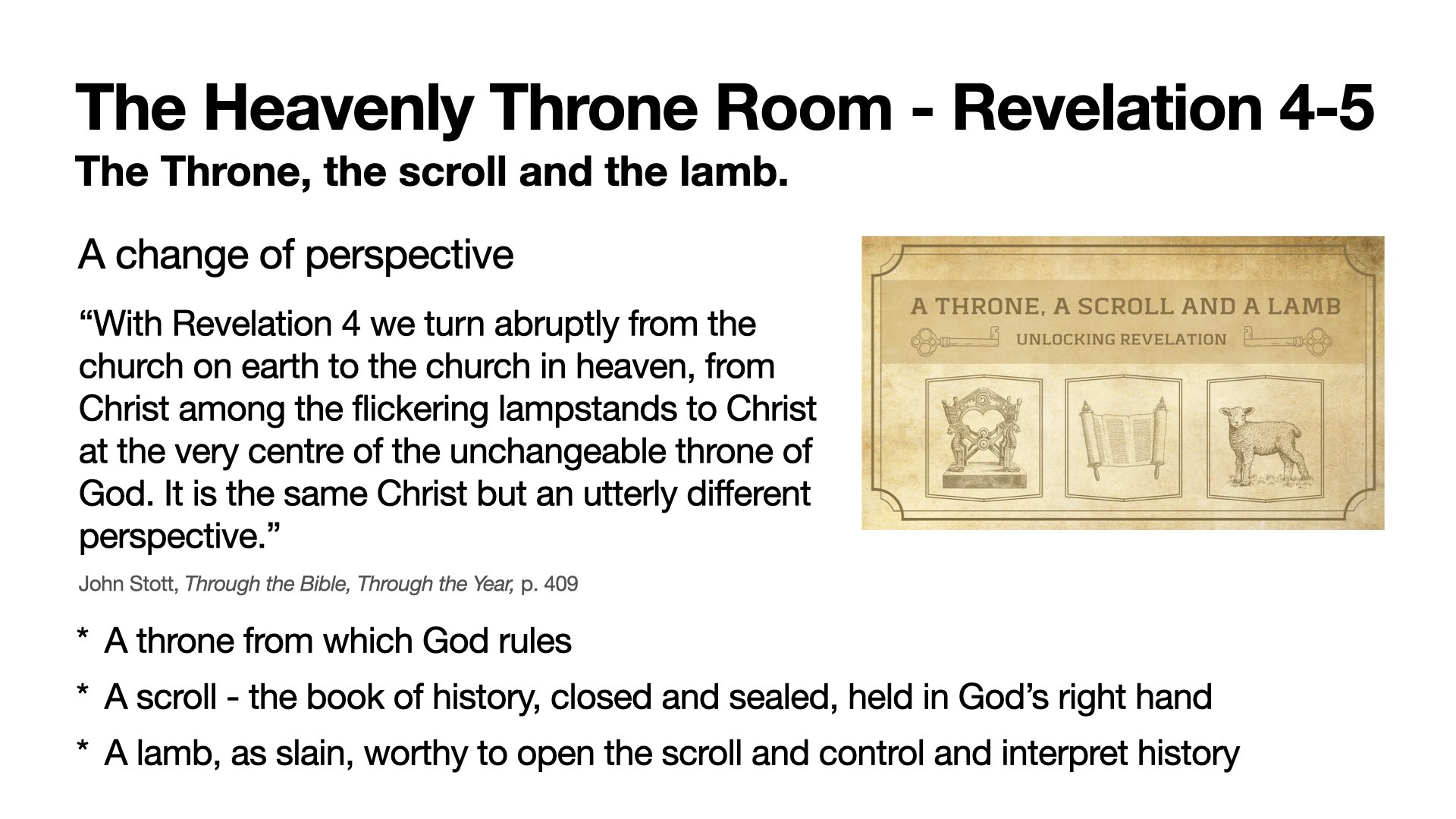
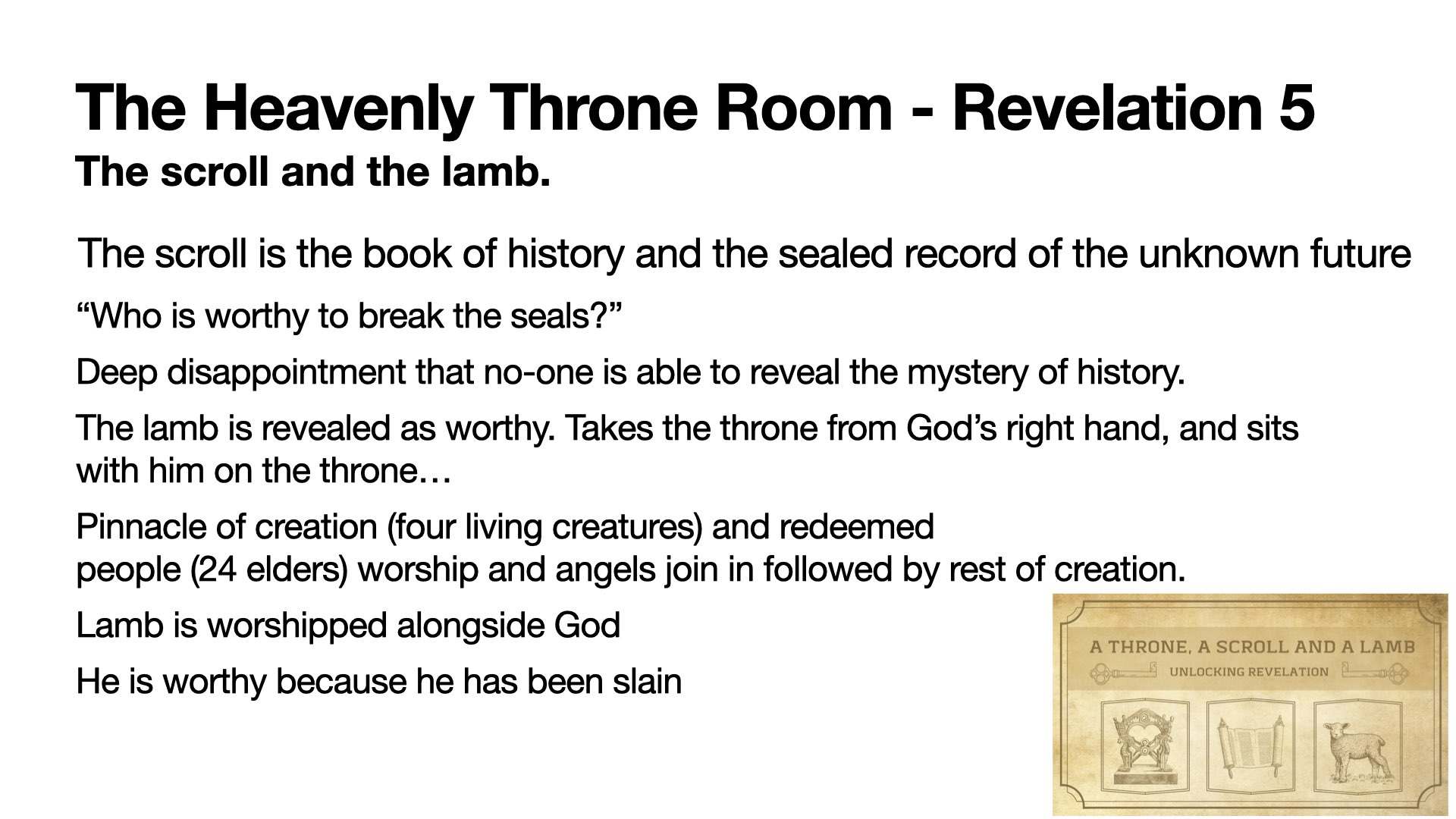
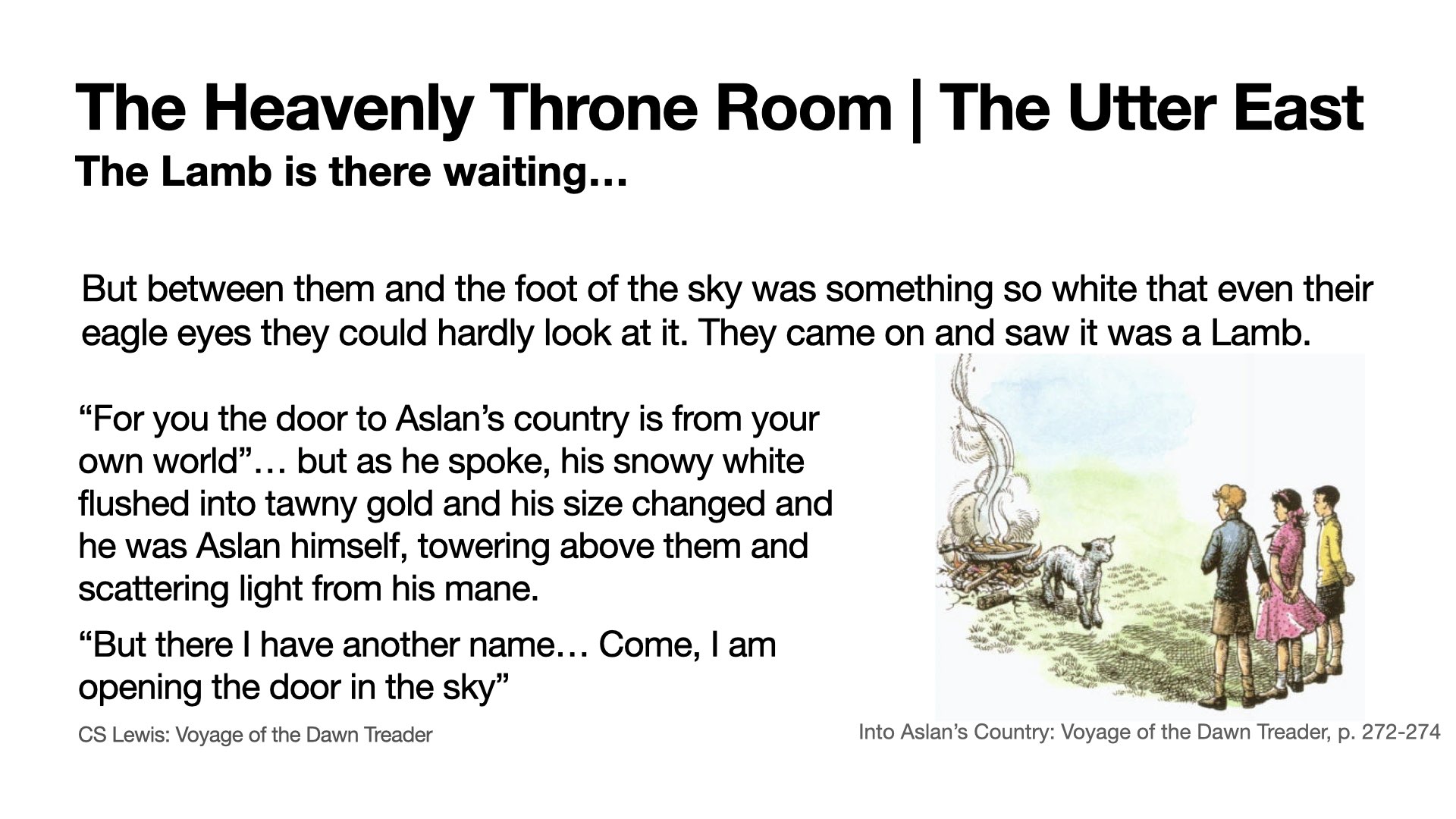
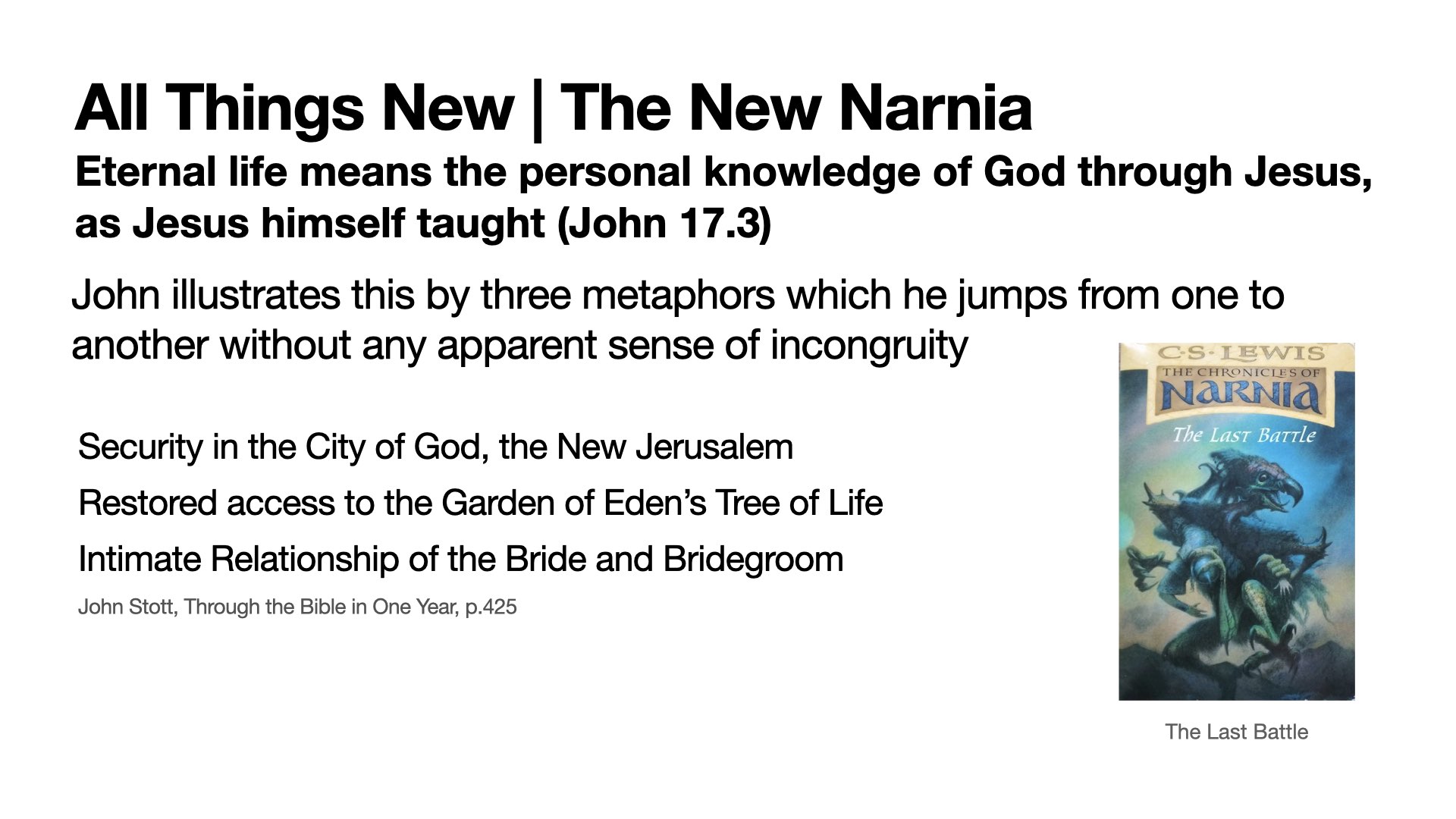
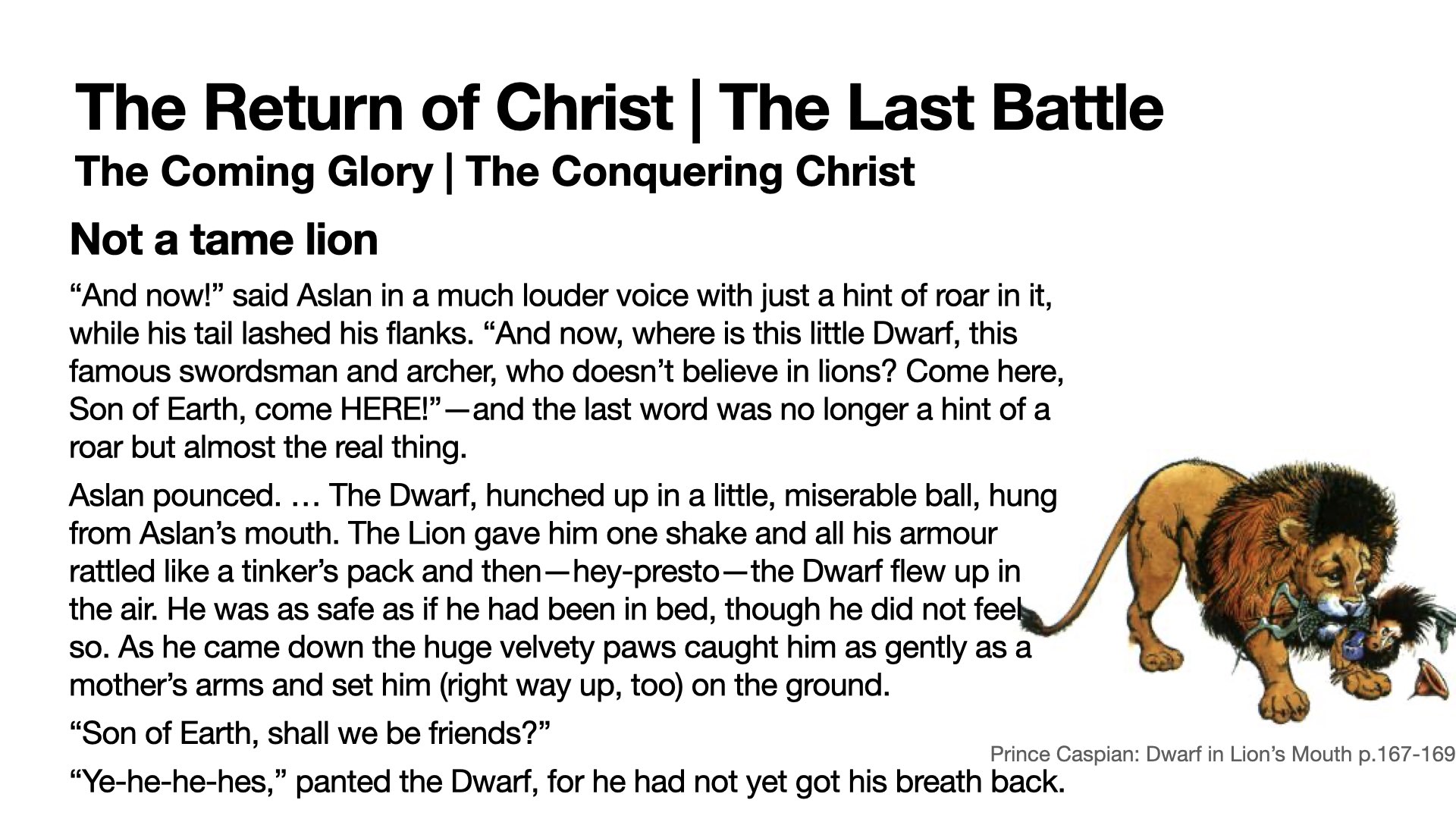
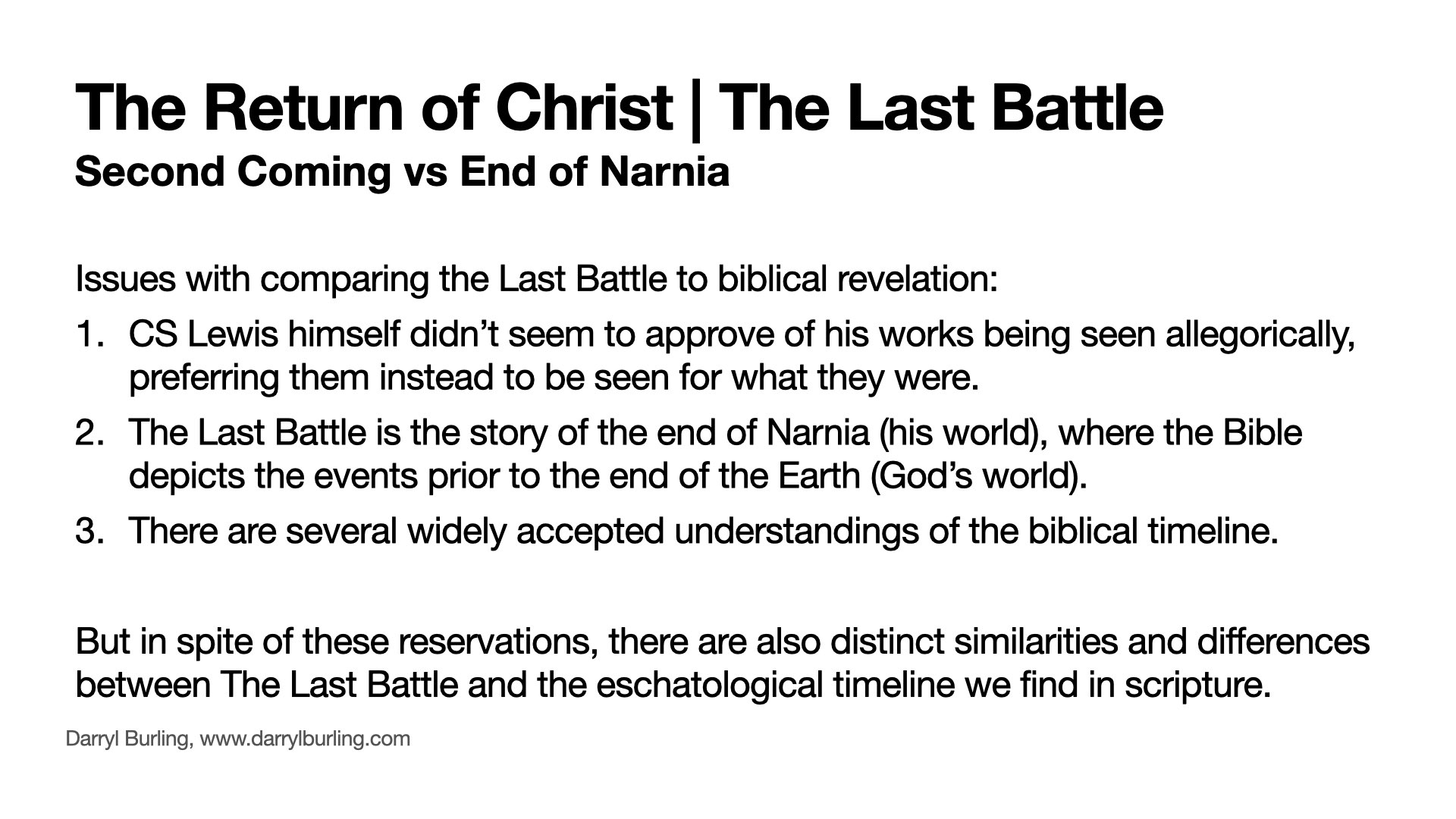
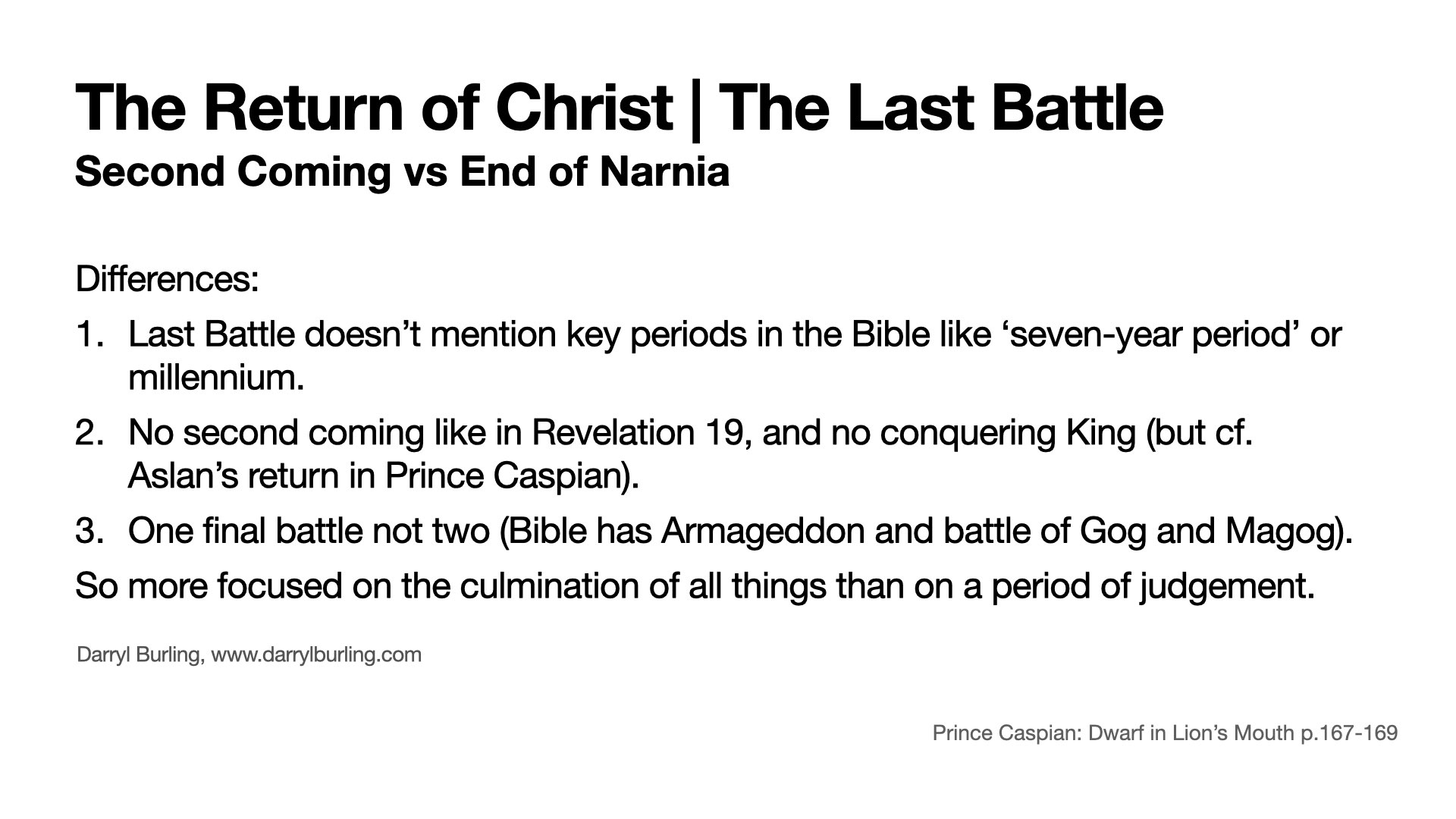
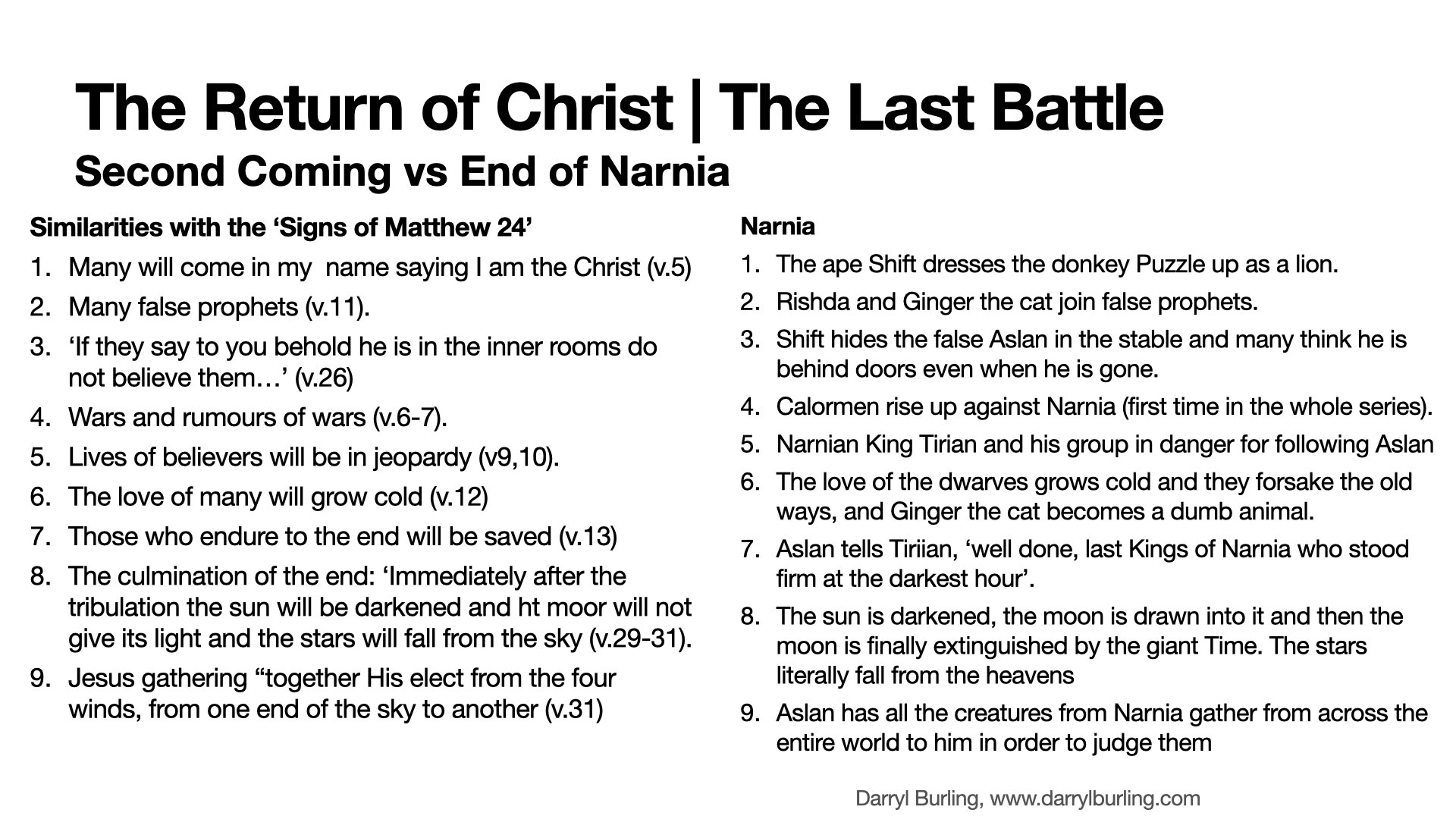
The Countdown theme echoes the name of the New Years Camp Nicola and I used to help run from 1998 – 2009. The teaching will include readings from CS Lewis’s Narnia stories and look at what we know about eternity from Revelation 4-5 and about the end times from Matthew 24-25.
Above all the verse that springs to mind as we look back and ahead is Jesus’ own words in his final teaching in John’s gospel:
“I have told you these things so that you may have peace. In this world you will have trouble. But take heart I have over come the world.”
For anyone who would like to follow it I’ll add resources and links to this blog post as the Countdown goes on.
Session Slides
Opening Session

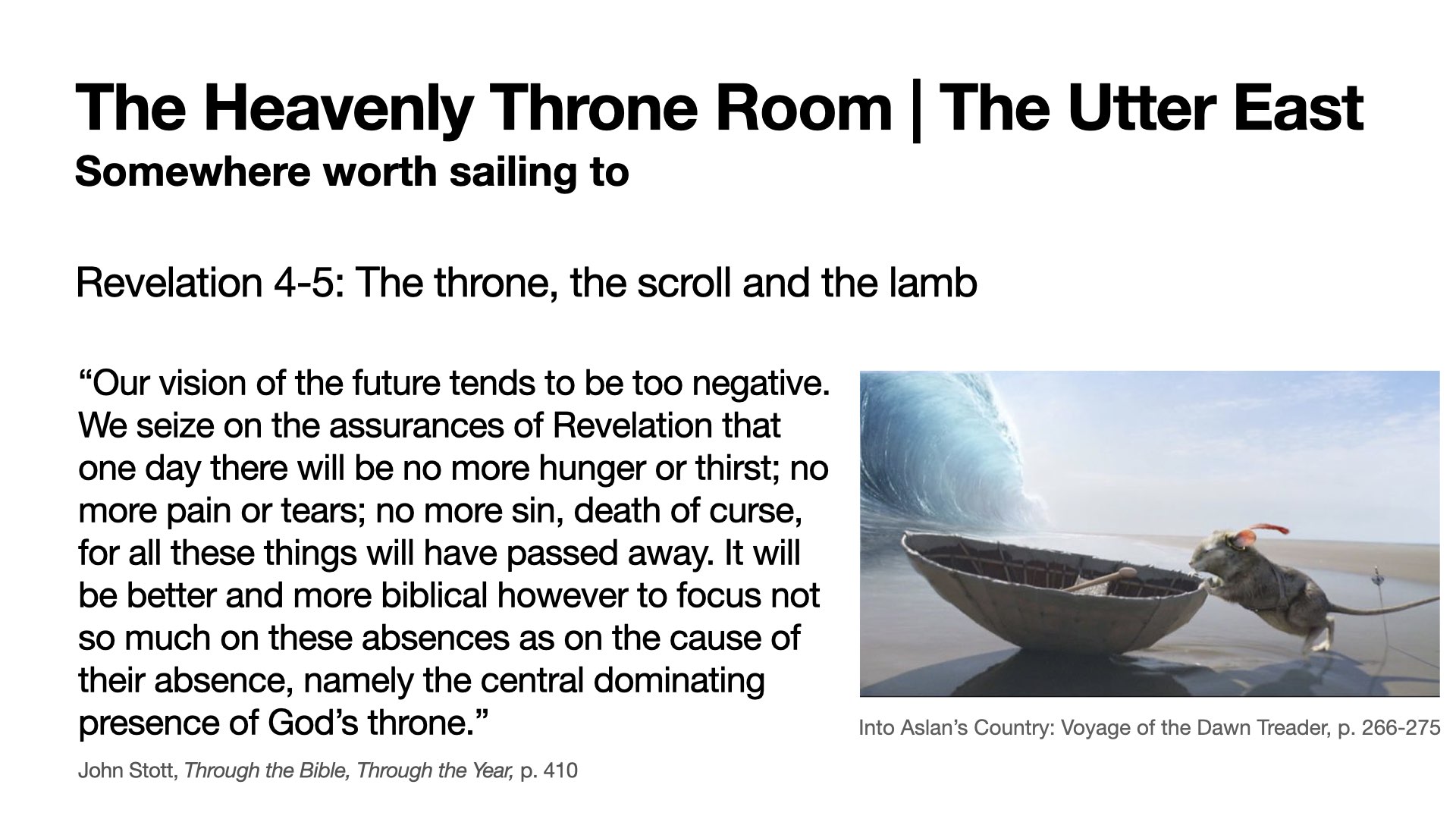
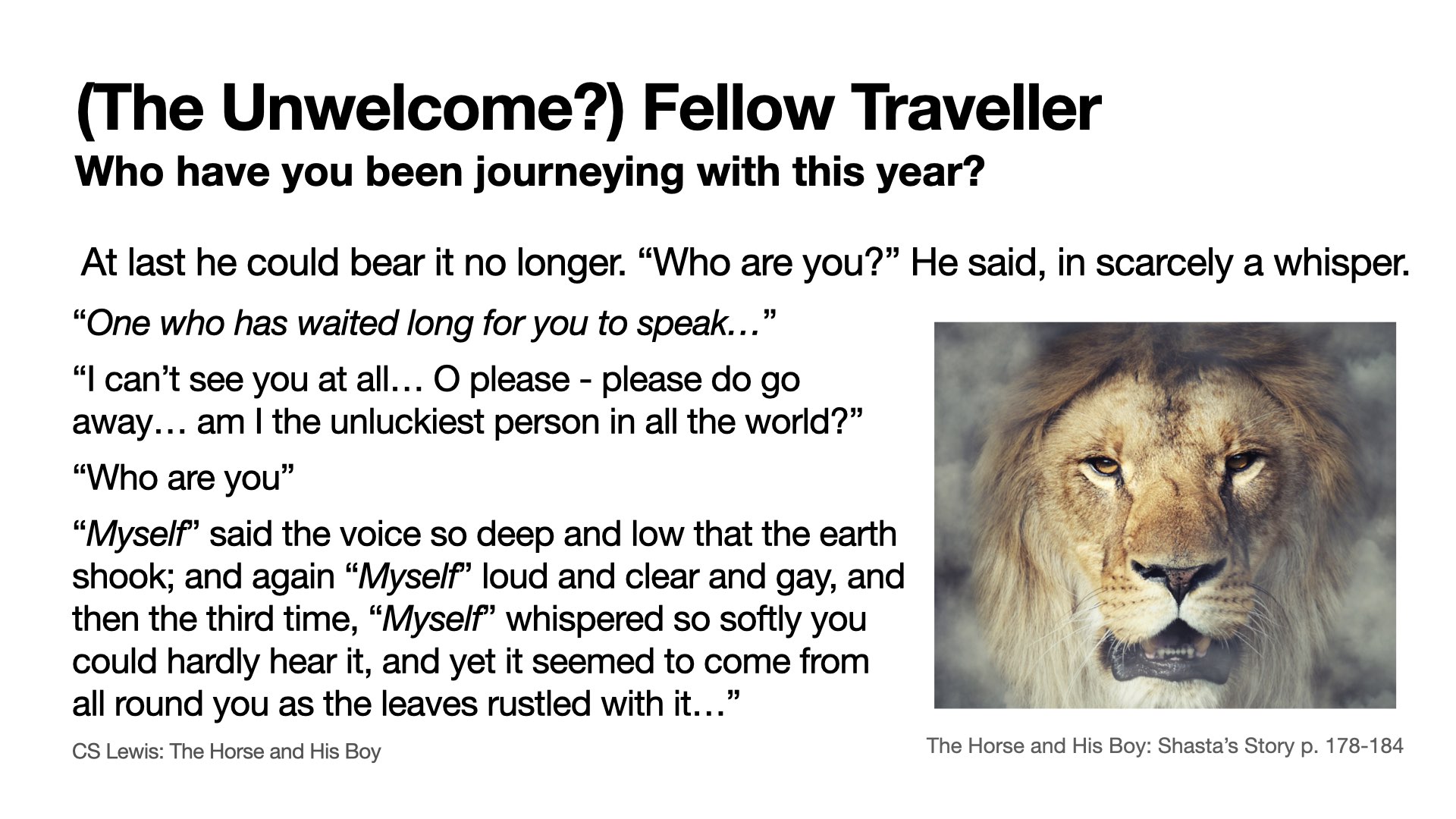
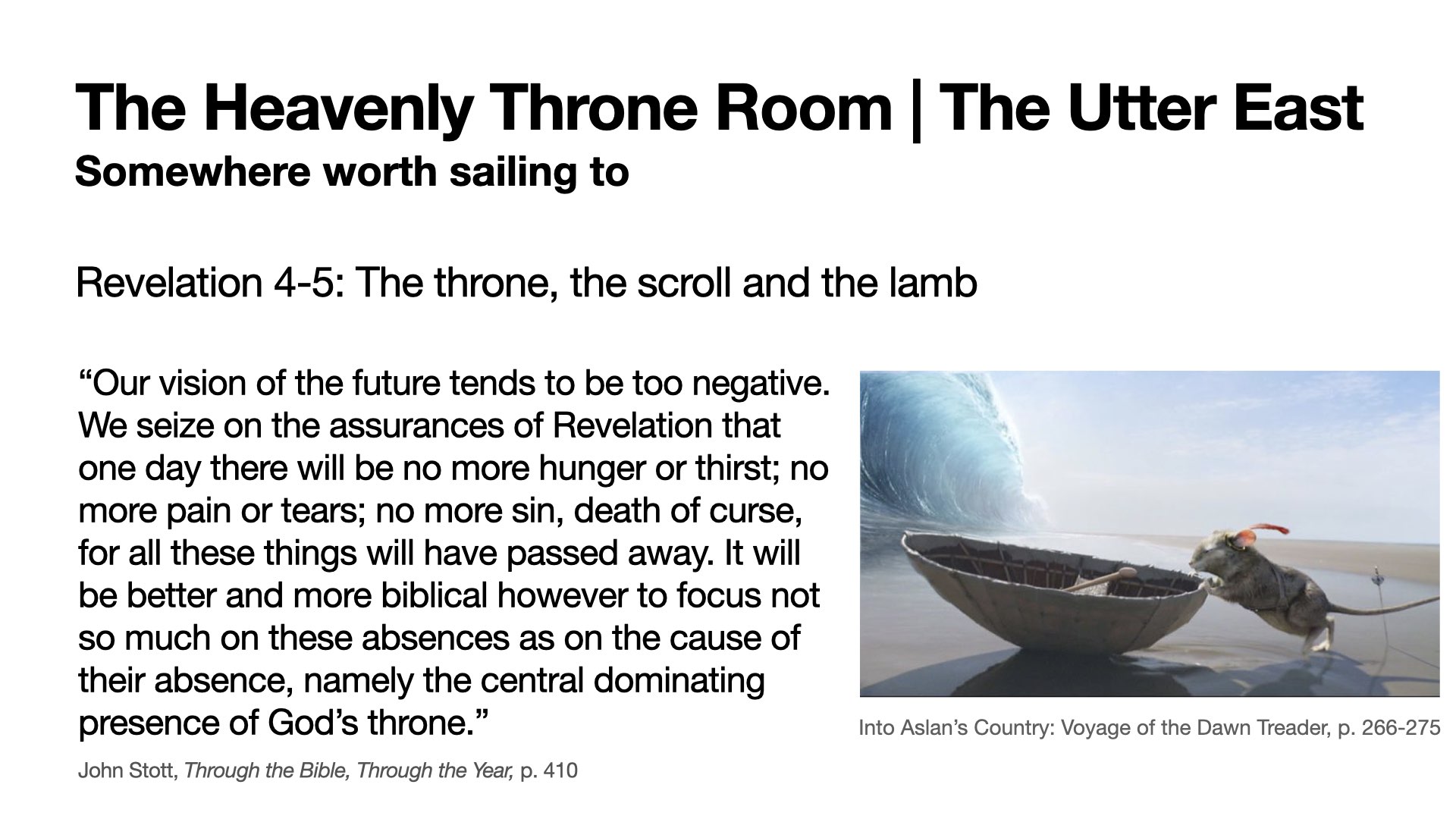
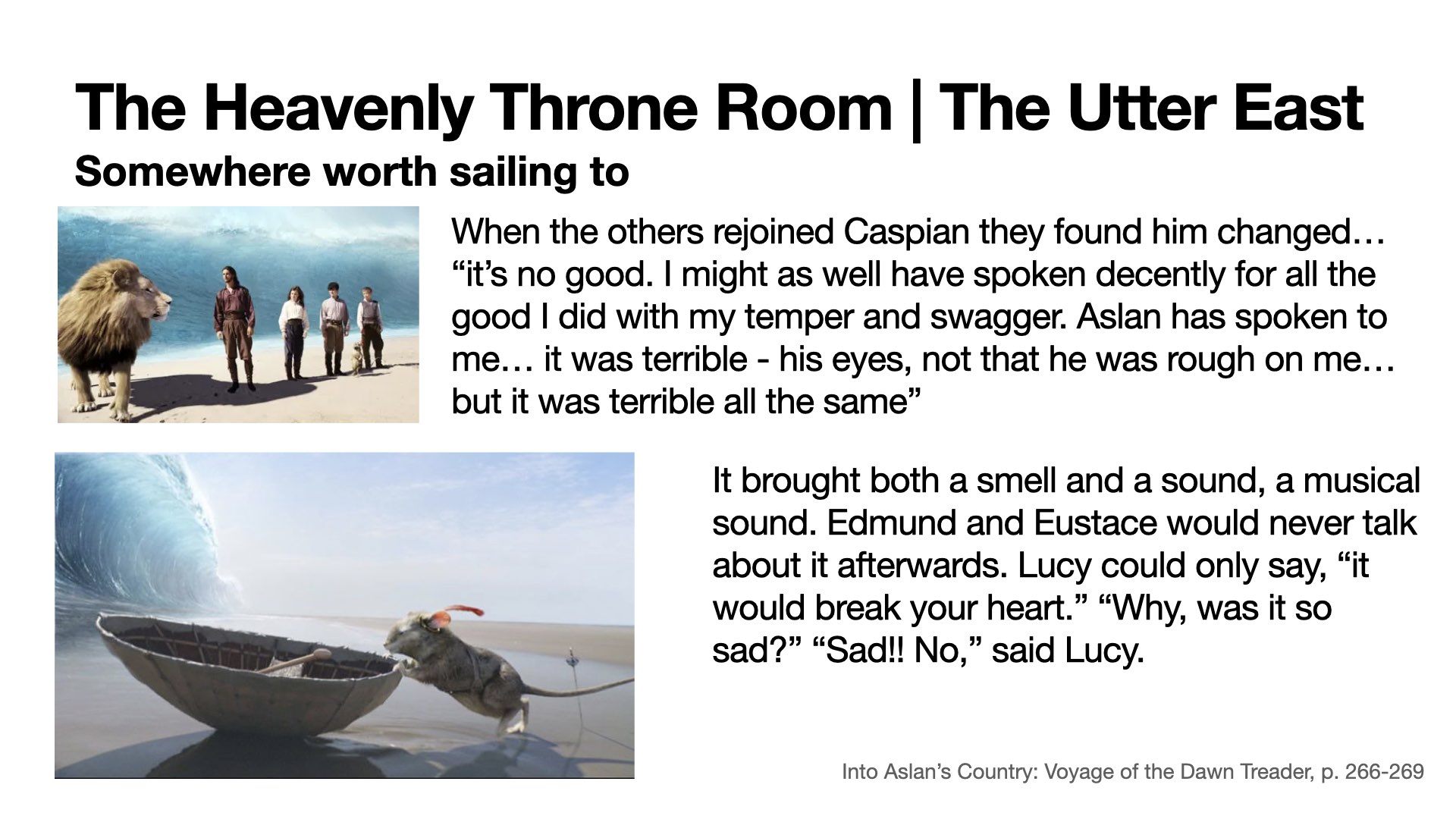
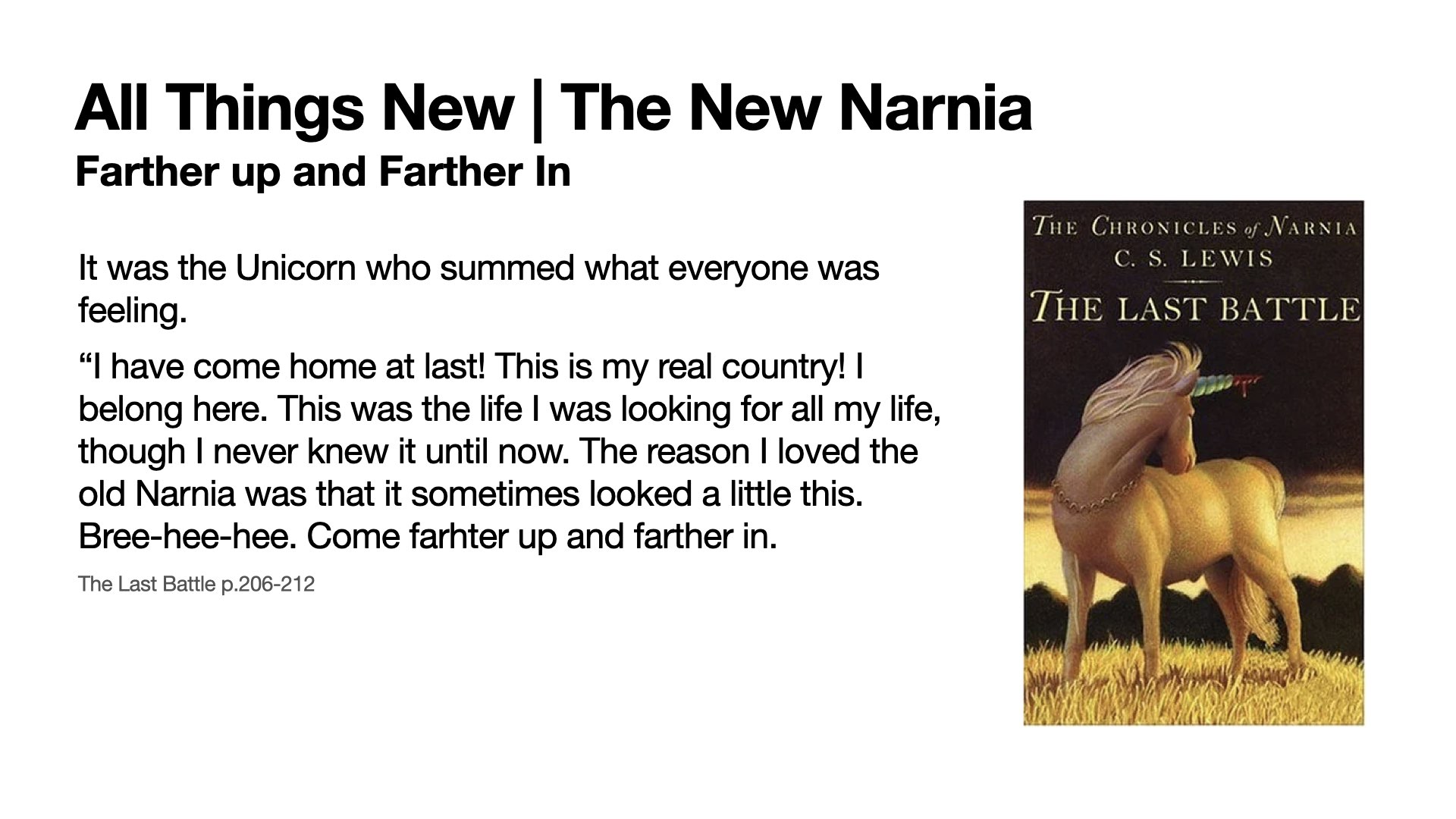
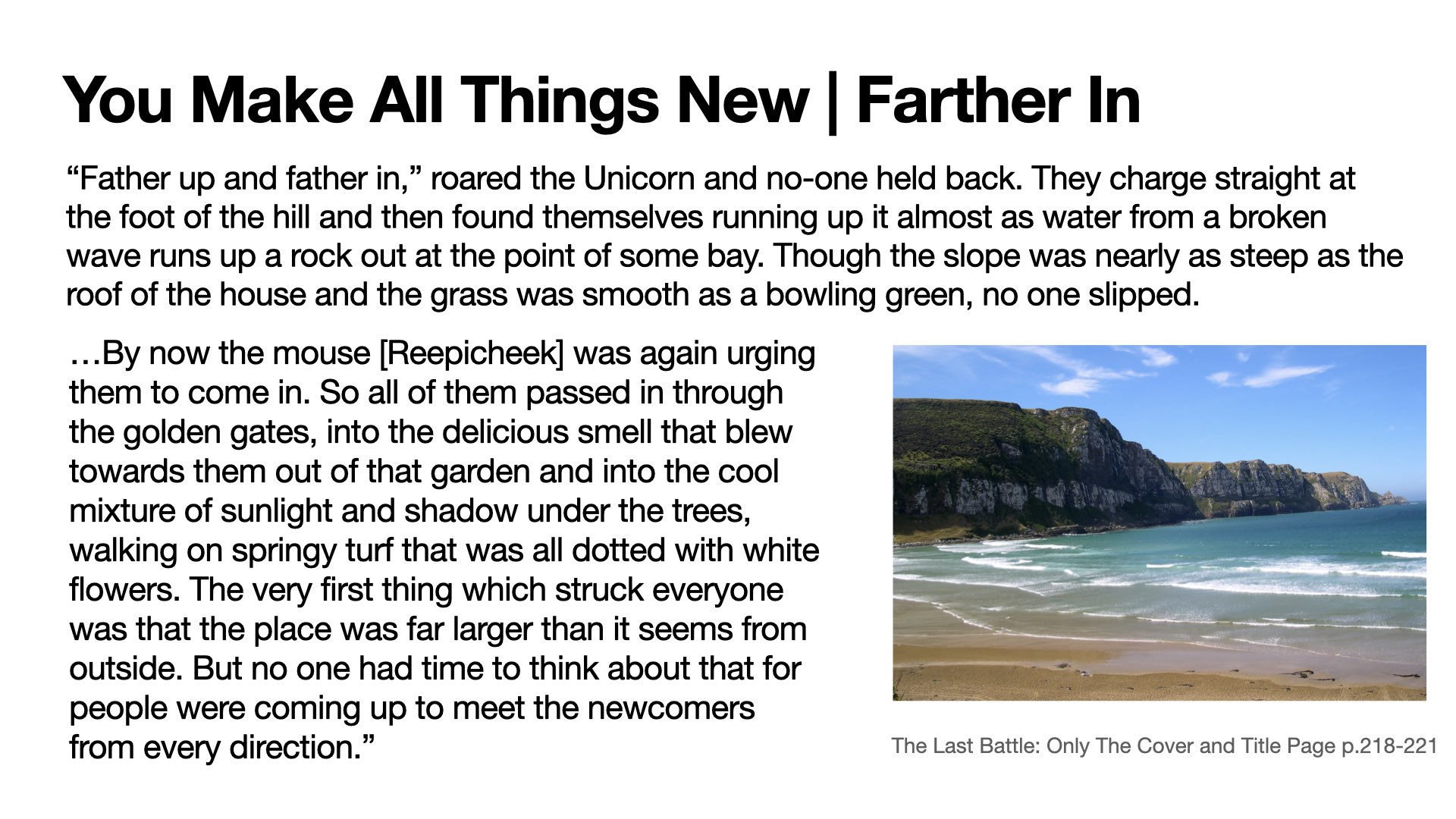
Day Two: The Heavenly Room | The Utter East & All Things New | The New Narnia
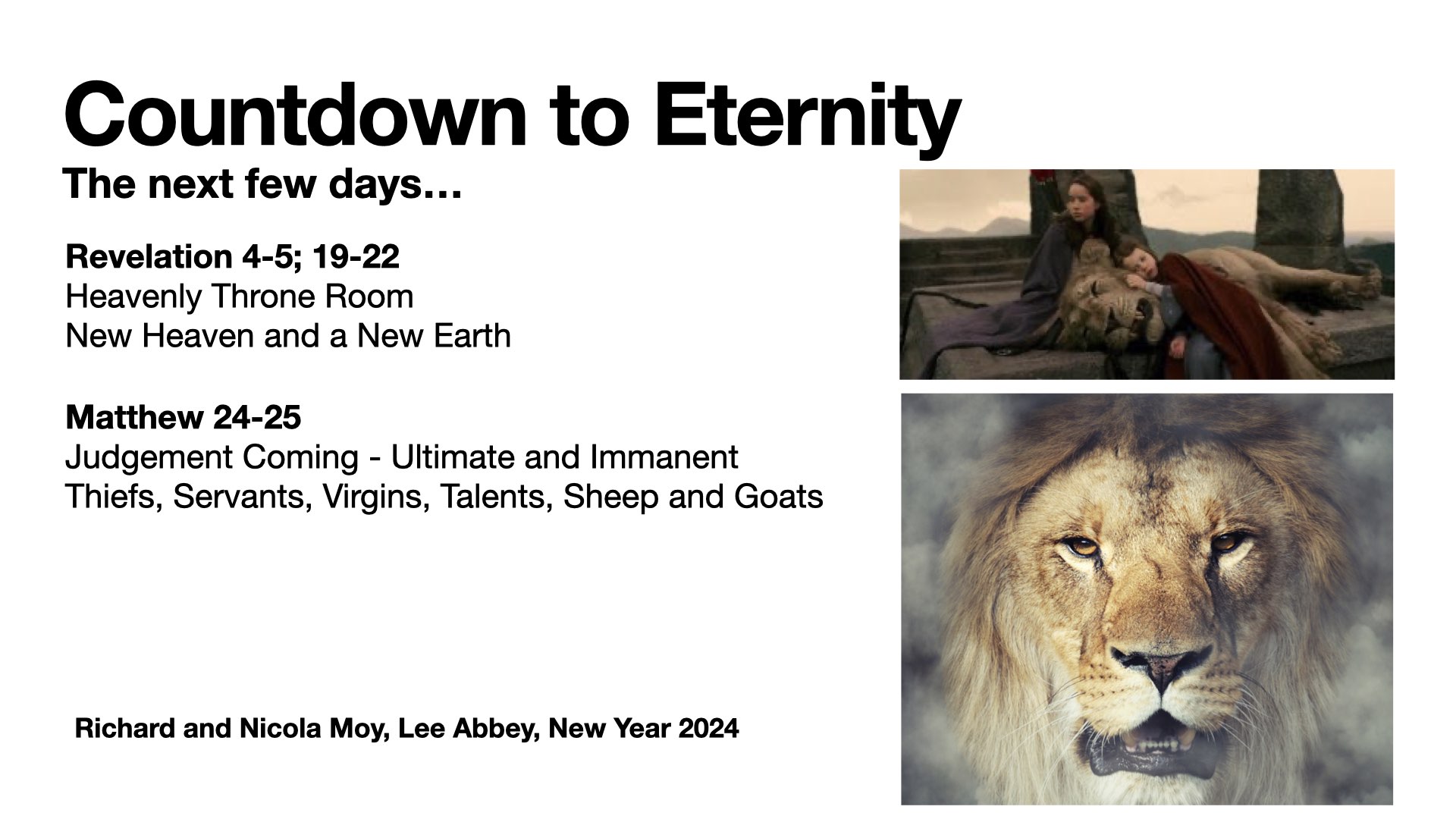

Day Three Communion
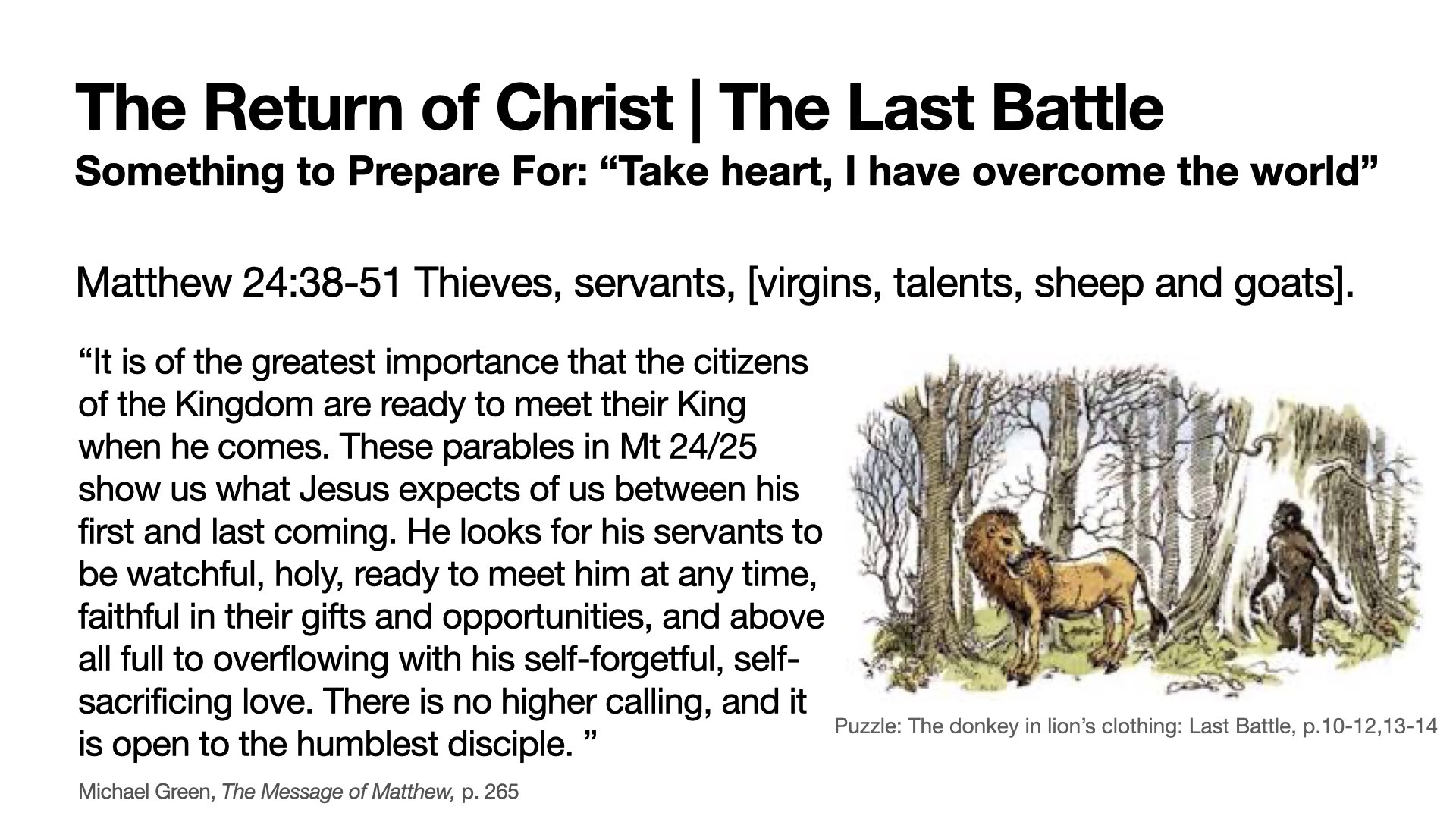
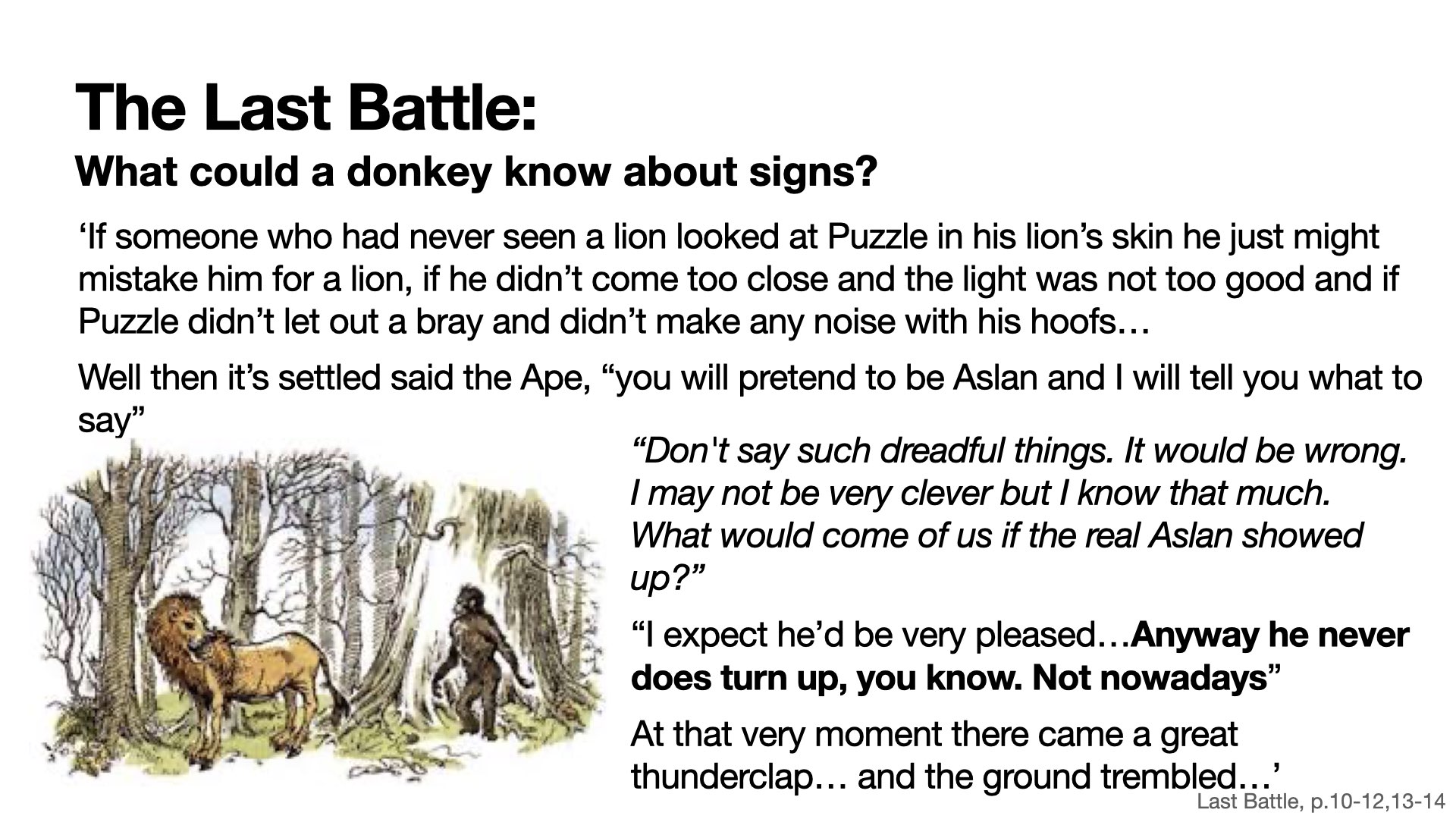
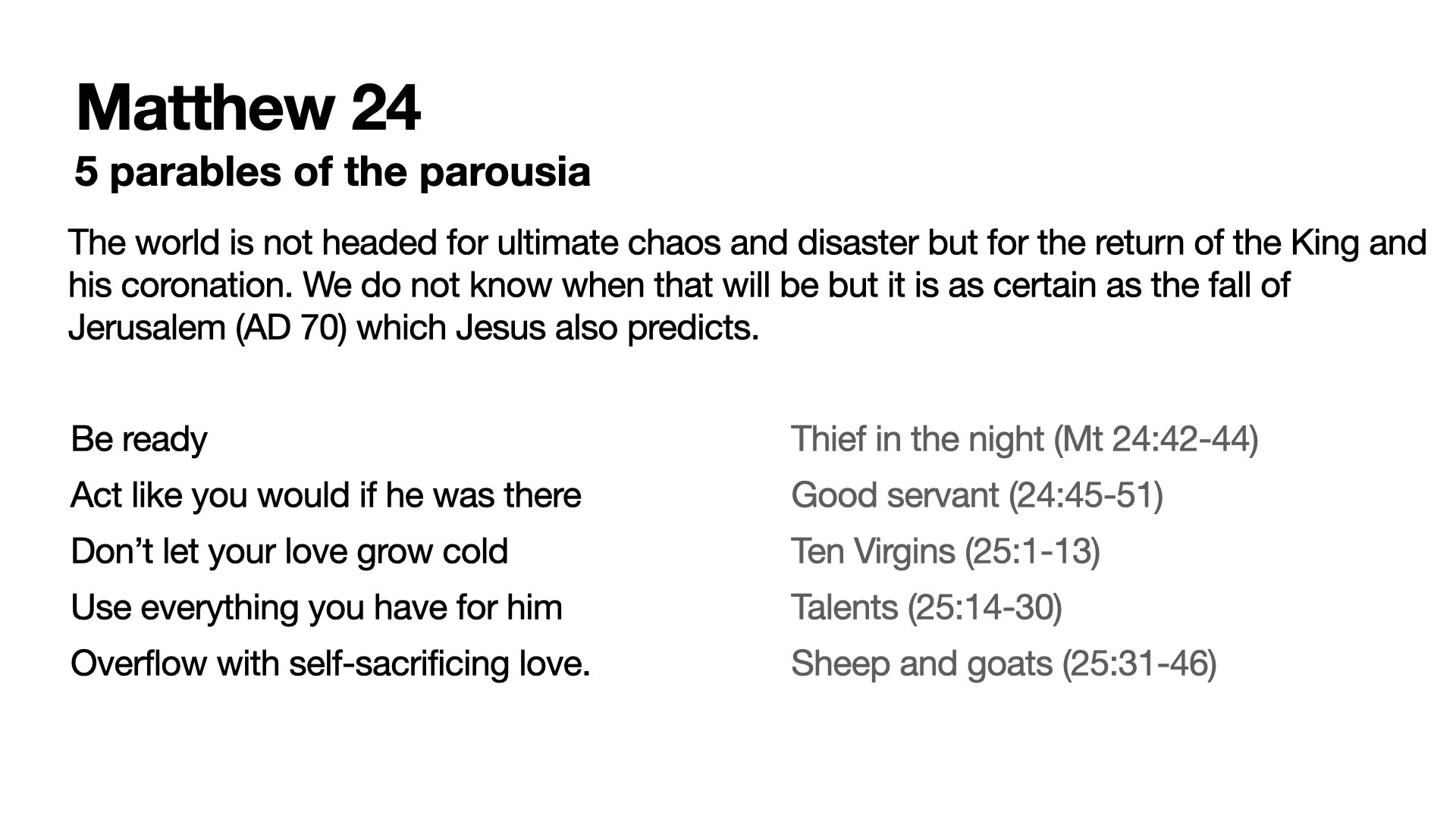
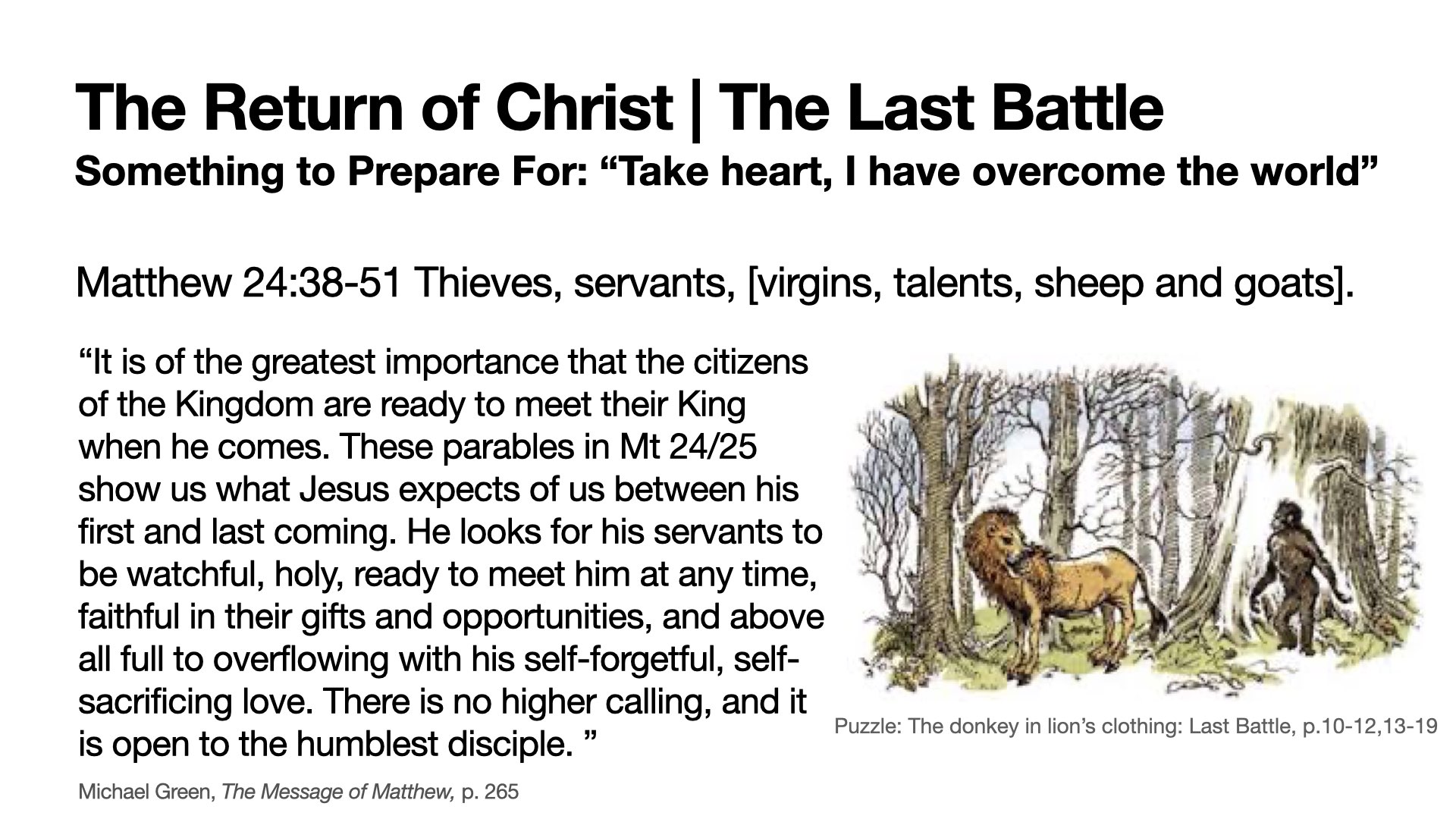
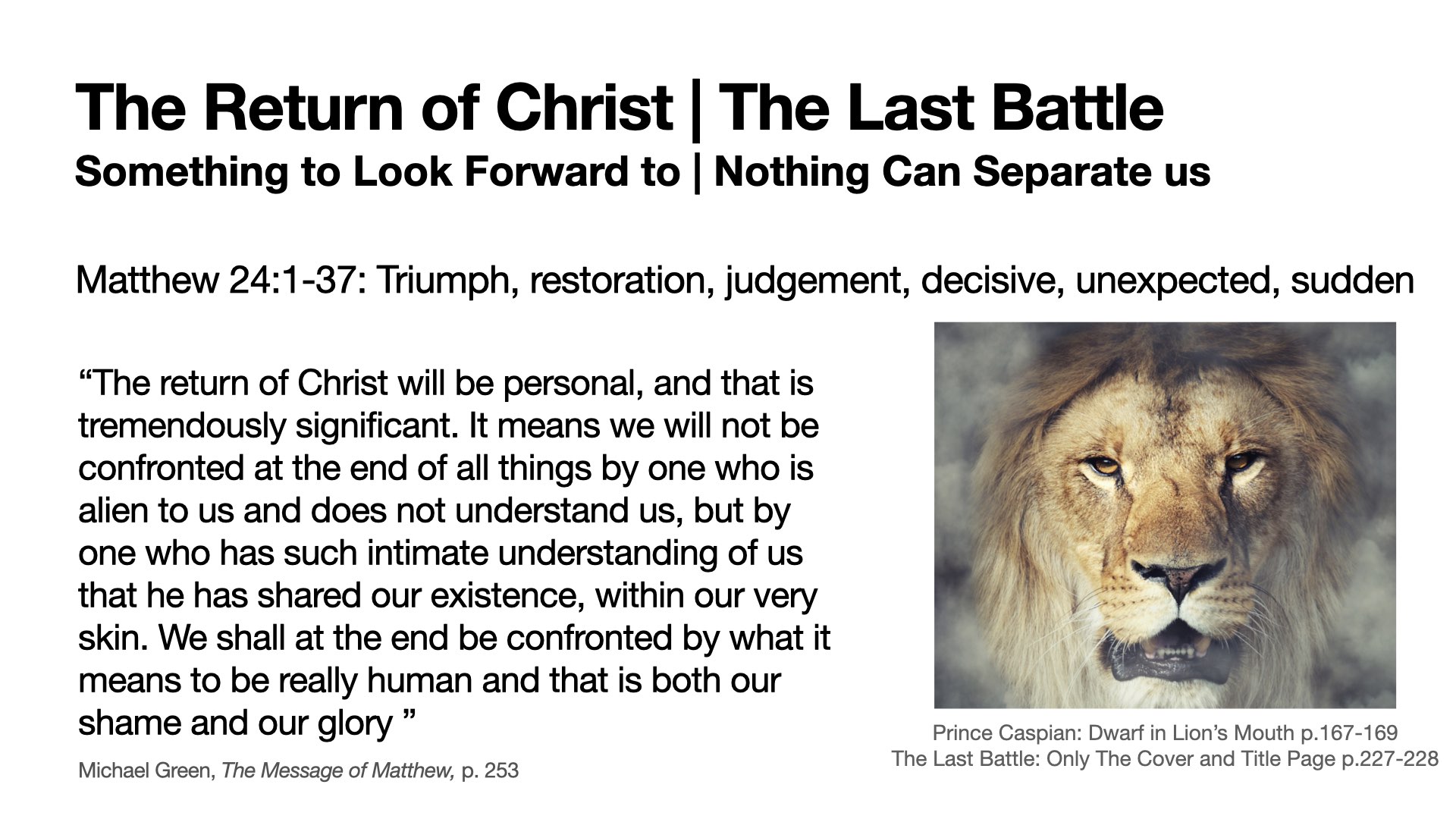
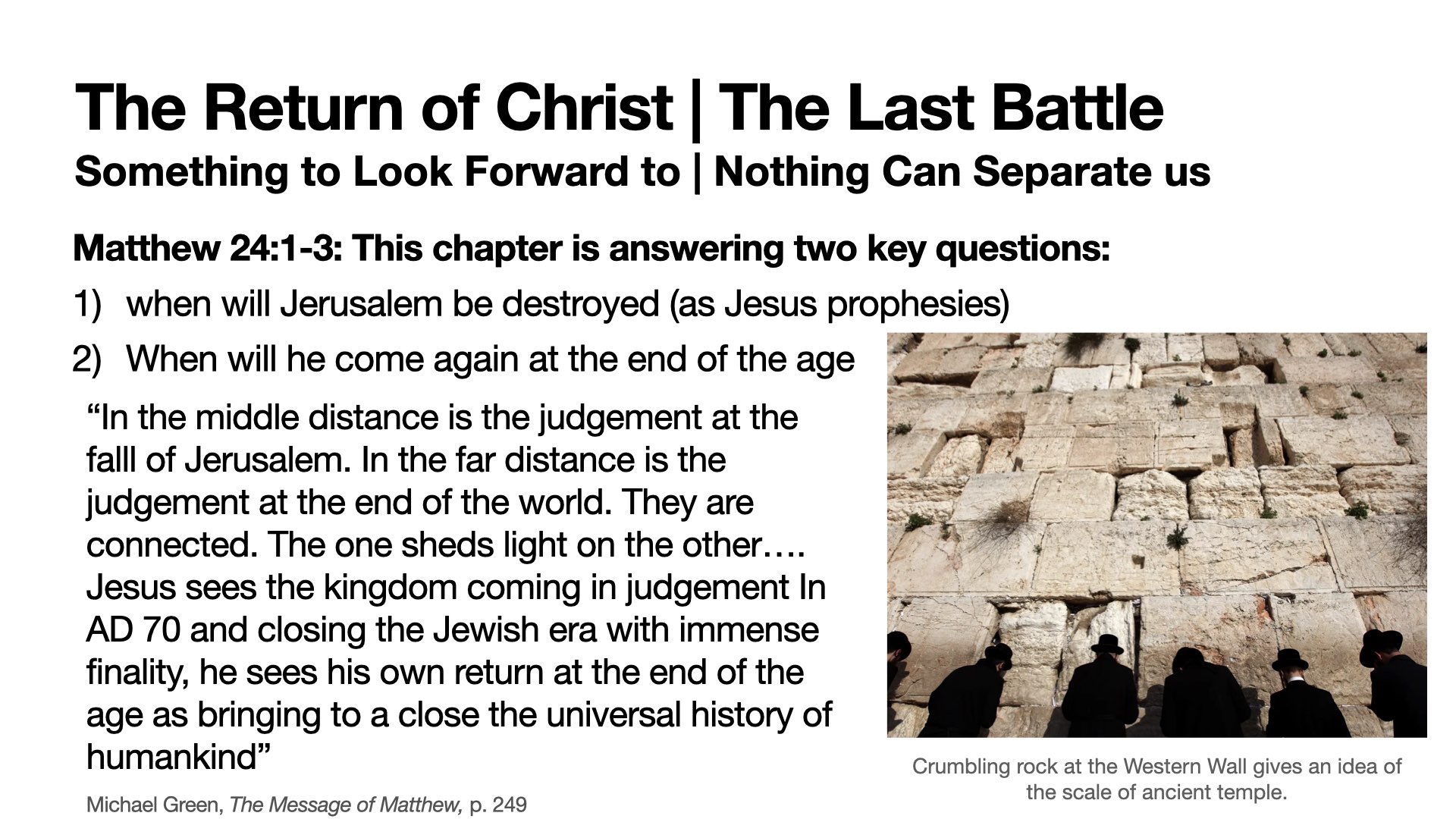
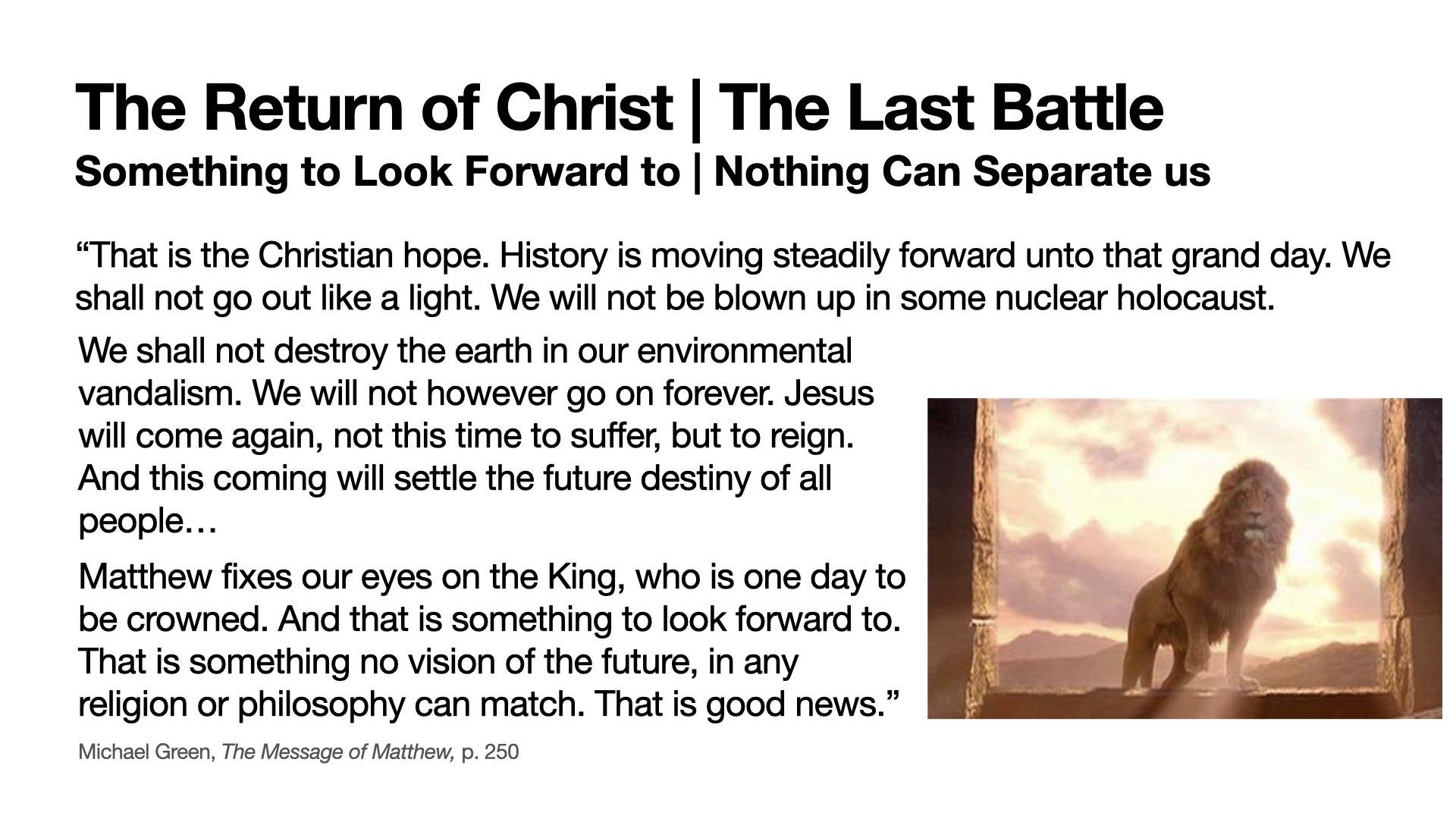
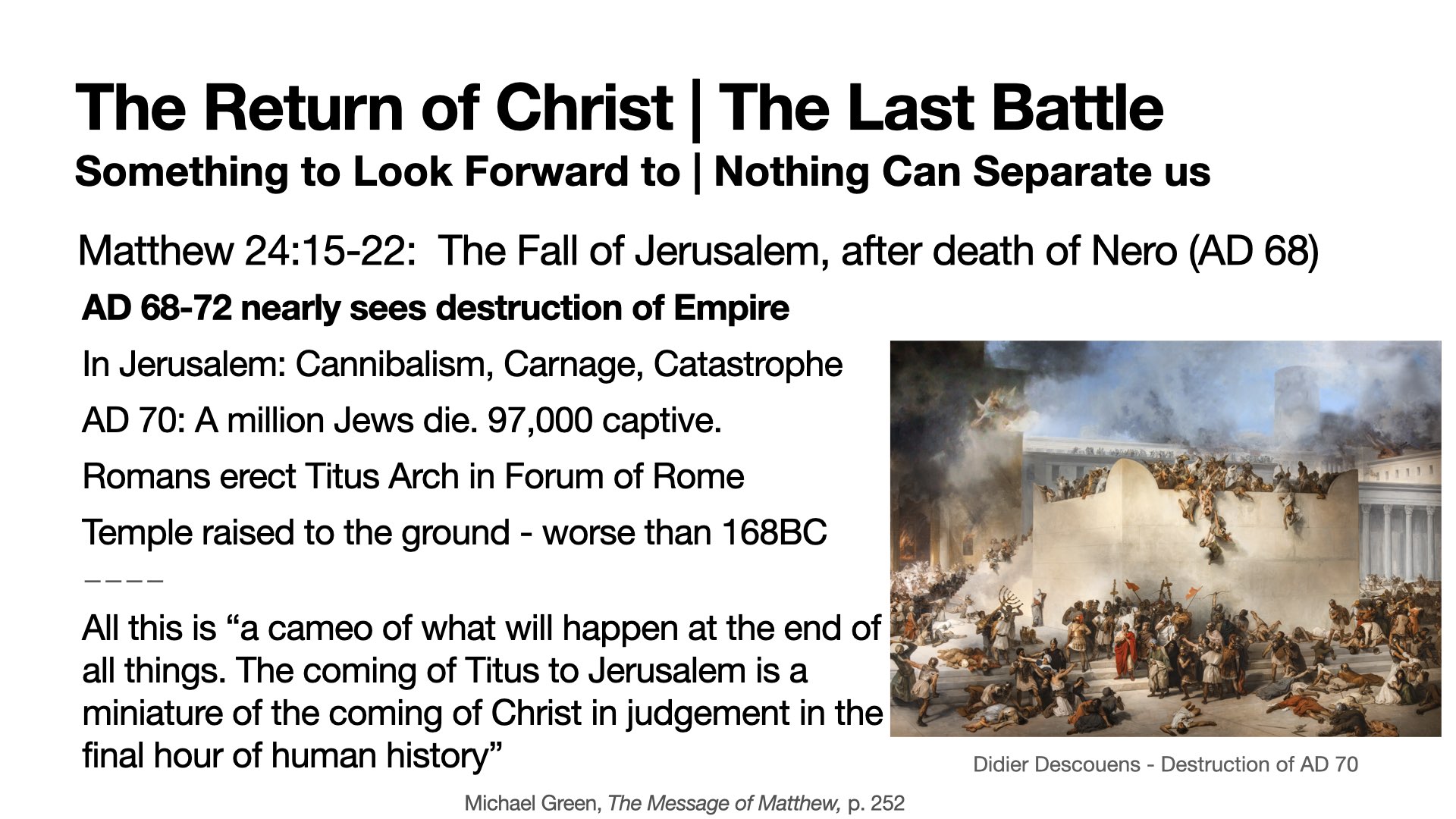
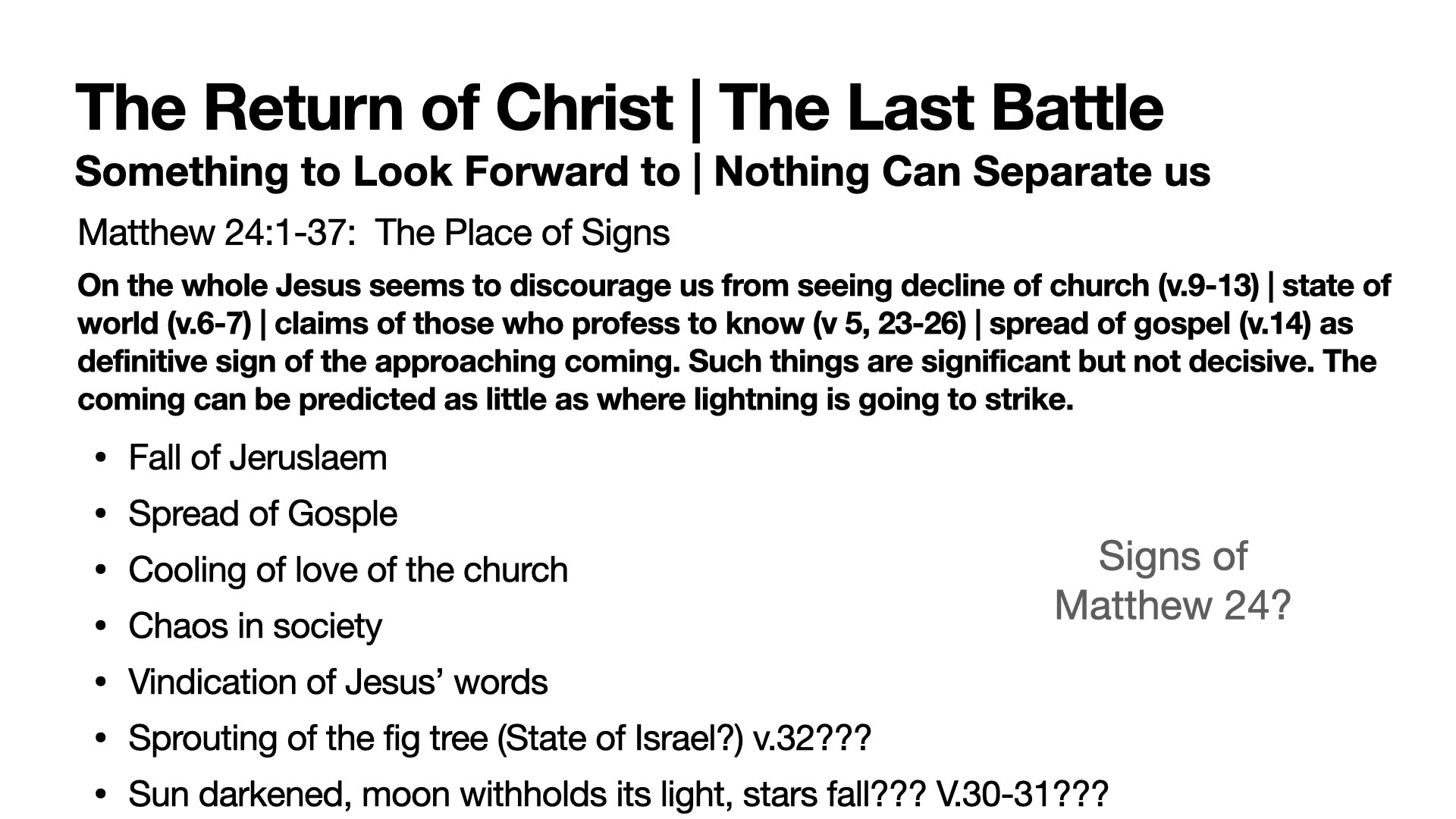
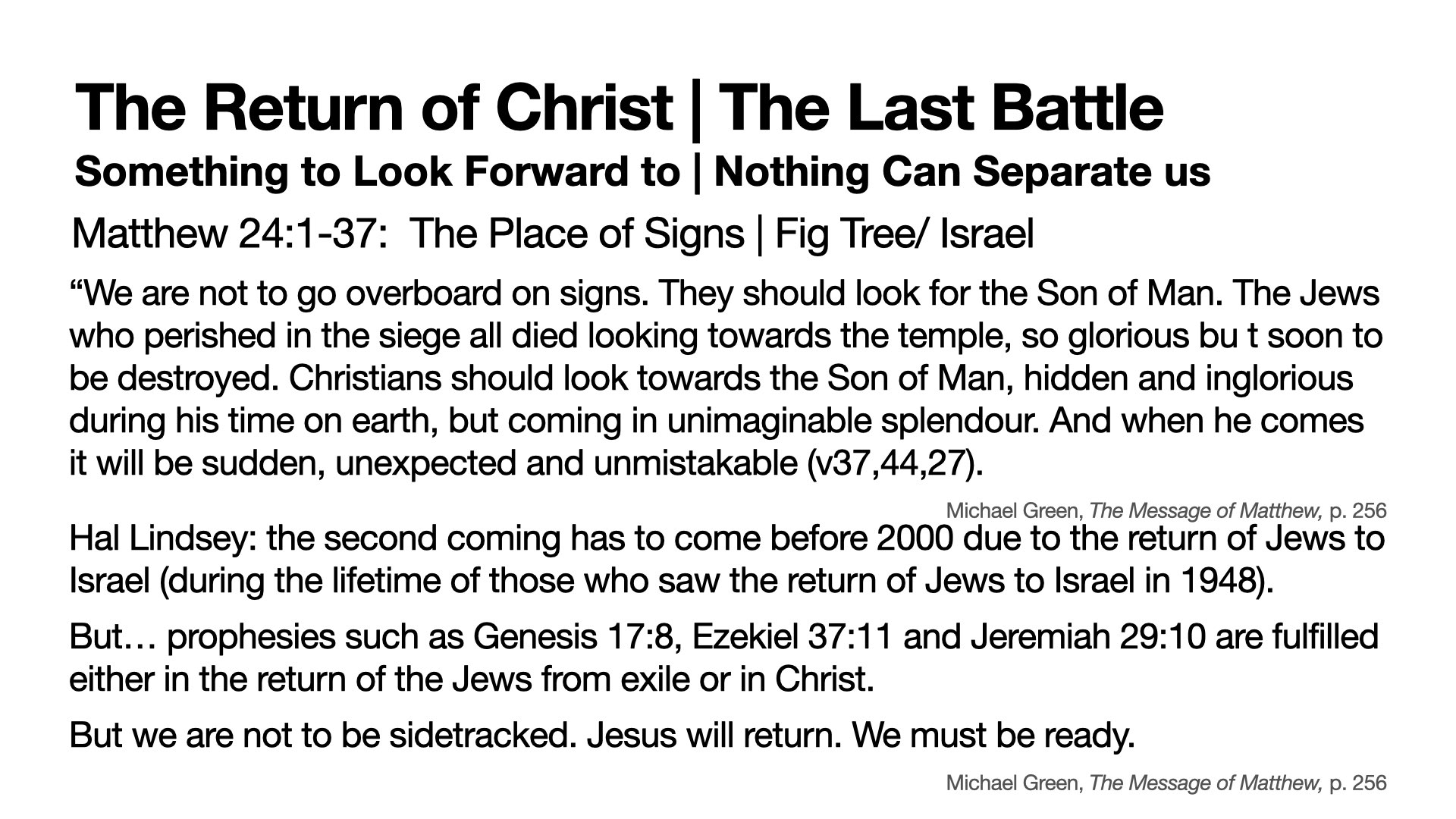
Day Four: The Return of Christ | The Last Battle





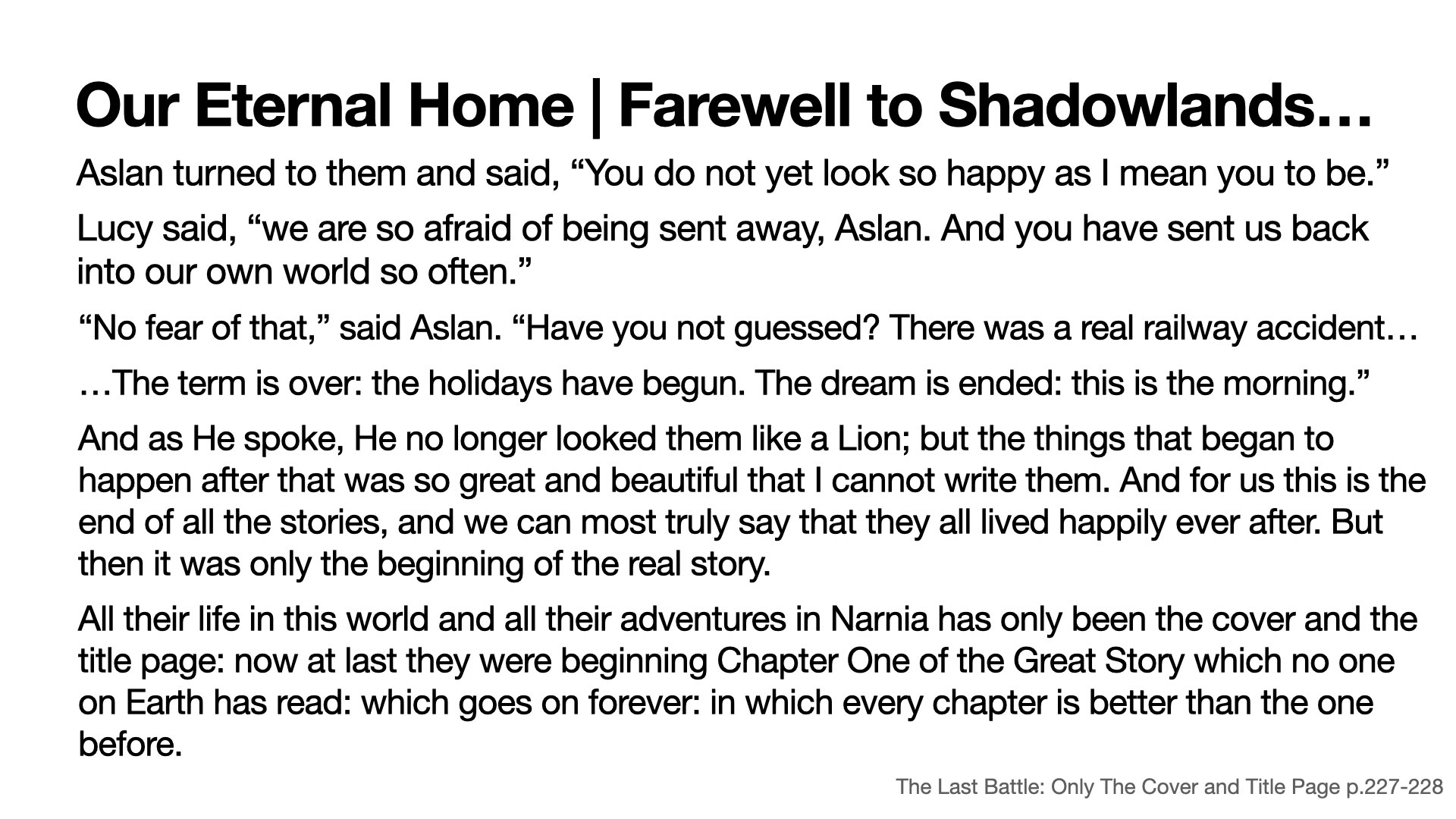
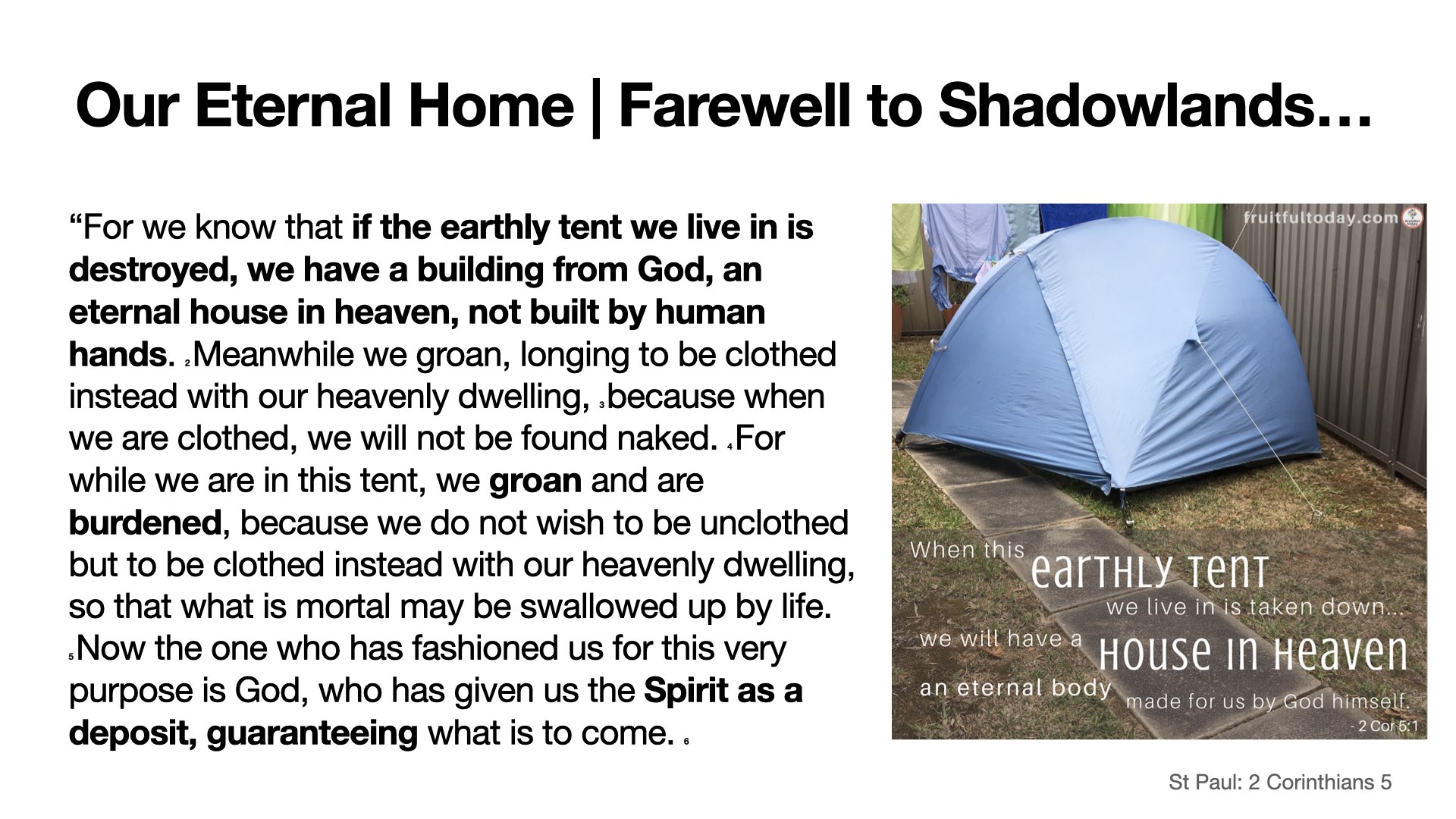
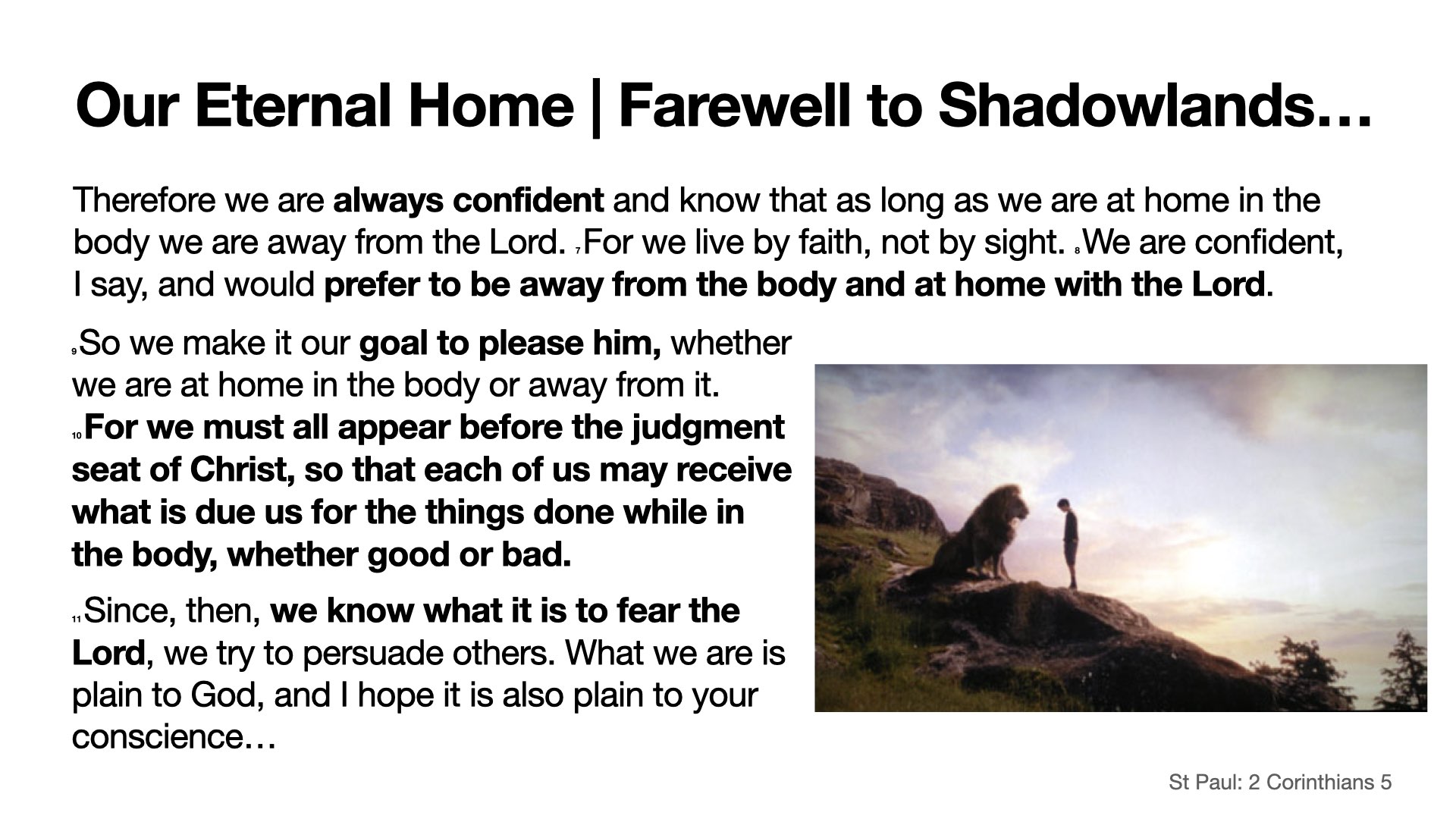
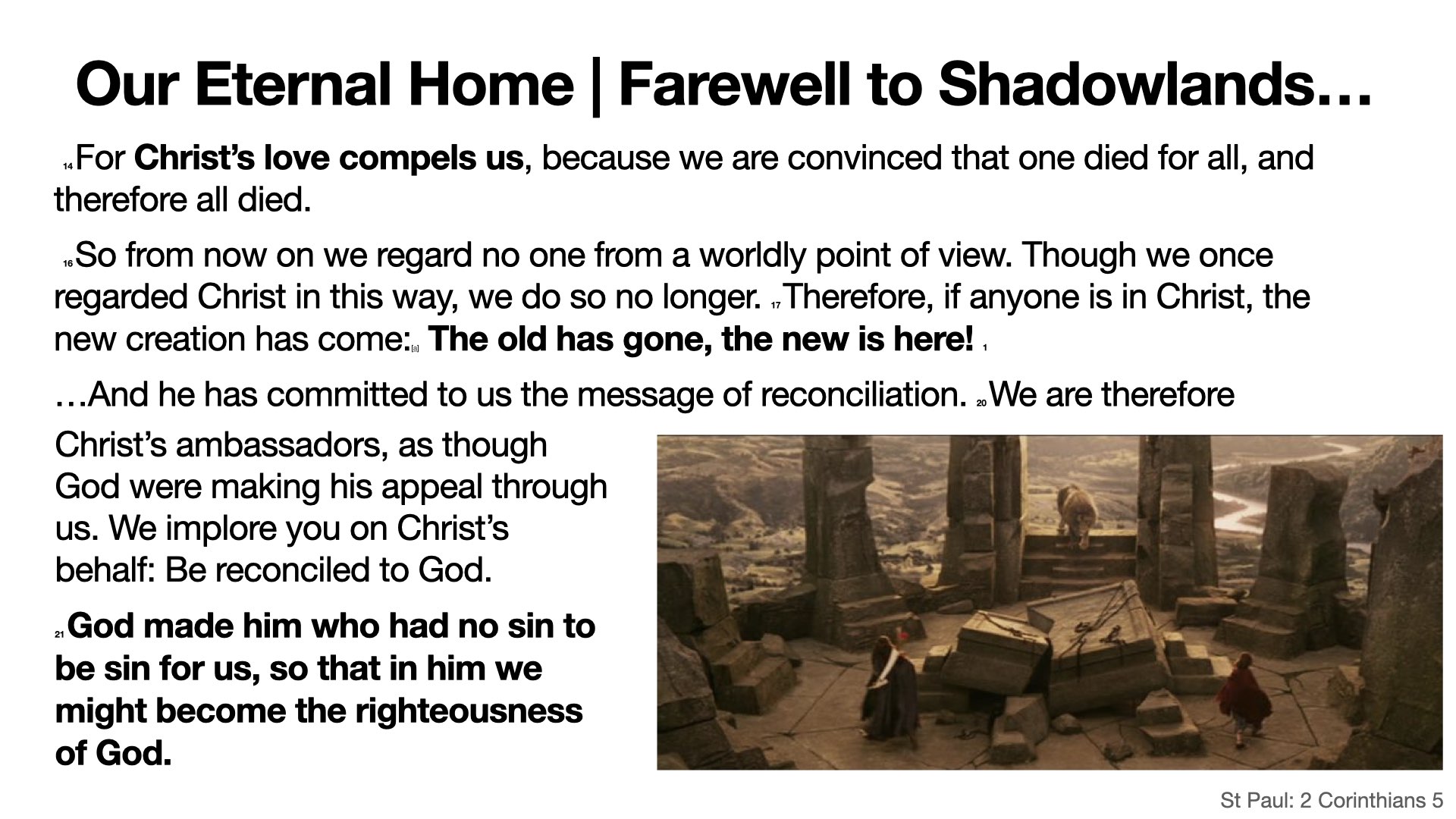
Final Session: Farewell to Shadowlands

Other Resources
Into the Wardrobe
For anyone wanting to take a deeper dive ‘Into the Wardrobe’ this YouTube Channel has enough content to fill your life for hours, e.g. the seven ages of Narnia and this one on the origins of Tash the Inexorable, the demon of Calormen, the Tashbaan god of death. The Channel also features some enthusiastic fan comments eg. @chowrites6179
“After hearing all the theories [on the Tash video] I’m of the opinion that all could be true to some extent.
What if Tash was a fallen star who fell to Charn, beguiled the Jadis and the other rulers, and slowly built up power through deals using his magic but it is Jadis who gave up a piece of herself for all of his power.
He possessed her and when she came to Narnia he willed for her to make him a kingdom to rule as he felt he deserved it but thanks to Aslan that never came to be so upon her death he was released as a free spirit.
He would then go out into the world again, making more deals with people till he came to Calormen and he convinced the people that he was a god and had them make him their people’s god. This was the sin that Aslan punished so they all became beastlike, like him.”
Rising Above Our Stale Thinking
Grace and Truth Blog (from Jon Kuhrt, a Lee Abbey camper) gives a personal view on how Narnia inspired him, and cites this Rowan Williams quote:
‘Lewis is trying to re-create for the reader what it is like to encounter and believe in God…The point of Narnia is to help us rise out what is stale in our thinking about Christianity – which is almost everything…the essential thing is this invitation to hear the story as if we have never heard it before.’
Rowan Williams
Is there a hidden code to Narnia?
But if you ever thought it strange that a very deliberate methodical literary professor produced something simplistic, thrown together or random (as Tolkein reportedly thought he had) or if you’ve wondered why the tone of each book seems to be very different Michael Ward has written a fascinating thesis that suggests there is a deep coherence to Narnia after all. Could it be a christological story that teaches us of old gods that teach us about the one God? Is there a hidden code?
Recommended Reads:
John Stott: Through the Bible Book by Book
“It’s a little bit like doing your Bible reading with a famous theologian, reading this book daily. This is a great devotional book to follow for someone who is already familiar with the Bible and wants to have the Bible speak daily into their life.” https://www.goodreads.com/en/book/show/248982
Michael Green: The Message of Matthew
Now more than ever we need to hear Matthew’s emphasis on the unity of God’s revelation old and new, its teaching on the life of discipleship, its exploration of the meaning of the kingdom of heaven, and its insights into the people of the Messiah, the end of the world and the universality of the Good News. https://www.goodreads.com/en/book/show/1248766
Sheep and Goats (Matthew 25)
Ian Paul writes:
Matthew 25.31–46 is the so-called ‘parable of the sheep and the goats’. But it isn’t actually a parable (since there is no suggestion that ‘the kingdom of heaven is like this’), and isn’t really about sheep and goats (as we shall see). But it is very well known, and is most commonly interpreted as an encouragement for followers of Jesus to care for the poor—which it isn’t.
It comes as the conclusion to this long section of Jesus’ teaching about The End, answering the second part of the disciples’ two-part question about the fall of the temple, and the ‘sign of your coming and the end of the age’ in Matt 24.3. That answer began with a parallel with the time of Noah in Matt 24.36 (when Jesus teaches that we should want to be left behind), and the theme of his coming being unexpected; it continues with three parables (Matthew likes to organise things in threes) about the wicked servant, the wise and foolish girls, and the talents/bags of gold…
…(read more here)
Lee Abbey: Why not come and stay/serve?
https://leeabbeydevon.org.uk
A life giving place for a retreat, conferences and much more besides.
 Your name is like honey
So glad I found this site looking forward to going over all the last few days talks from Lee Abbey. Everyone here loved it. Thank you so much for this resource
Kath and Nigel Kelland
Lee Abbey Associate Community
LikeLike
I’ve been sitting and reflecting on all that I received over these past few days at Lee Abbey with Richard and Nicola Moy. It’s been the unfolding of a treasure that I always knew I had deep down but it’s come to the surface of my mind and heart in a very special way. It’s been a real joy to spend time at Lee Abbey and allowing my mind and heart to be renewed.
LikeLiked by 1 person
This reflective time at Lee Abbey has left a joy in our hearts and made us look forward with anticipation to eternity in all its fullness. Maranatha, Come Lord Jesus! Nigel and Jan James.
LikeLike