
1: Remember – the baby in the bath water
[Dedication: This chapter is dedicated to my dear friend and one time colleague Revd Ivor Saunders who died yesterday. A man who walked in such steady discipleship he never seemed to need the ebb and flows of ‘waves’ to be thoroughly washed in the love of God].
[Note for overseas readers: In the UK ‘Charismatic’ is a term that applies widely to churches which have experienced Holy Spirit renewal within the Church of England and other historic denominations, not just to ‘new’ churches. You can be evangelical, liturgical and charismatic. Charismatic does not mean prosperity theology but an openness to the Holy Spirit’s graces and power].
Dear friends,
Remember the baby in the bath water. If you’re ever thinking of giving up on the charismatic church, giving up on ‘renewal’, why not pause for a moment and remember how you came into it? Was it all in one go? Was it slow or sudden? Gentle or dramatic? Was it an immersion, a saturation or a sprinkling? Or was it something you have always known and not even realised was quite there… a birthright perhaps, building on the legacy of those around you?
I came into the charismatic movement thrice: Once in the womb which was reinforced in my early upbringing, once in Romania as a teenager and once, like many others in the UK, through the Alpha Course Holy Spirit away day.
My Story:
My parents were converted in the 1970s into the North Fellowships in their late teens. I’ve listened to tapes of the founder GW North teaching, and from what I can tell he was the real deal charismatic leader. He didn’t want to market the gospel, so all his works were self-published, although he would have benefited from an editor. He had a clear healing ministry, and a love-filled heart, a bit of a mystic maybe. It seems they were keen on young converts breeding for the Kingdom and so I came into the charismatic movement in the womb surrounded by three chord choruses, tongues and prayer meetings and perhaps like Jeremiah with an emergent call. Some of my earliest months were spent being cared for in the pastor’s house and I imagine I was well prayed for in this time.
As a child I remember singing to God quite naturally, joining in the prayers at my brother’s dedication most sincerely (aged 5) and moved by the water baptisms of our lodger and others in our little church. Later we moved into a large FIEC church, the Worthing Tabernacle, under Tony Sargeant’s ministry. Tony was a wonderful man who had studied the importance of ‘unction’ (Holy Spirit anointing) in Dr Martyn Lloyd-Jones’s preaching ministry. I was similarly moved at the ‘Tab’ by visits from Ishmael (charismatic singer/writer) his dancing daughter, and missionaries like Jackie Pulllinger who had seen addicts delivered in Hong Kong as she prayed in tongues and Richard Wurmbrand who had supernaturally survived communism in Romania. On church camps and Scripture Union camps I committed my life to Jesus at every opportunity and remember a tangible experience of the Spirit on a Norfolk sailing boat as I quanted, jibed and tacked for a week each Easter with Christian friends.
But life in the UK is attritional on young believers and by the time I was 17 I needed to get a thousand miles away from my parents, church and school to have a full conversion. Even then it nearly didn’t stick. In 1995, when the charismatic movement was in full swing in the UK, I went to a cessationist baptist church for a week of outreach in a village in a remote corner of Romania. There I encountered a filling with the Spirit that overwhelmed me, left me repenting deeply and wanting to read Scripture, sing and (eventually) testify. And testify I did the night after conversion to 70+ villagers and campers. I found God answered my prayer of the previous night to ‘give me the words’. Words have kept flowing ever since, and a nervous wannabe public speaker was turned into a boy/man who found to his enormous surprise that people listened when he spoke. I came back to England, got baptized, gave my testimony in a sixth-form assembly to my 16-18 year old peers, got discipled by my teacher David Cook (using JI Packer’s Knowing God and Mark’s gospel) and my pastor Gordon Steer and his wife Ruth who hosted me each week so I could attend youth group. I read scores of missionary stories, was invited to preach, lead a youth camp and do all sorts of things – and still I nearly blew it.
The pastor from Romania who impacted me straight after the conversion was a godly man called Adi Popa. Astonishingly talented, I imagine he could have led almost any organization and he played music at concert levels. He had invested his life in church planting in communist and post-communist Romania. He had a crown of thorns over one of the doors in his humble home, and lived with his family off what seemed like a few dollars a month and the proceeds of a family allotment. His evangelism technique was to translate Wimber/Vineyard songs, play them on his casio keyboard in a market square, gather a crowd (often of hecklers/persecutors) and then preach the gospel to them. By my second visit in 1997 I think four churches had been started this way.
So when in 1996, nine months or so after my conversion, he came to the UK I felt like it was the second coming of Jesus. Although I’d read through the New Testament several times and the Old Testament in a few months (10 chapters a day), and had all this mentoring investment, I still strayed from a close walk with Jesus. And as I did so I took it out on his church…I pointed a finger saying, ‘the church is rubbish, the church is hypocritical, if only the church was holy…’ when all the while I guess I was pointing three fingers back at me. That weekend I had a grace encounter, a baptism in the Spirit encounter, and a harrowingly tough conviction encounter.
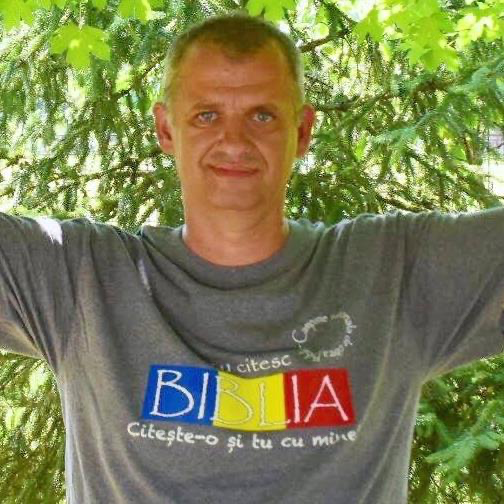
Grace, Baptism and Conviction Encounters
Meeting Adi Popa again was a pure grace encounter. Ashamed and afraid to see him, all I met was love, recognition and acceptance. So the next morning I knew I wanted more time with him, and as he was keyboardist for the Alpha Course away day, I duly gatecrashed. Nicky Gumbel was on the VHS videos from the height of the Toronto Blessing explosion era of the Alpha Course explaining his encounters with the Spirit, praying in tongues and how to be filled again with the Spirit. We then started to sing a song Adi had translated into Romanian and we as a church sang regularly, but there were lines I just could not sing. I realised I had lost the joy of my salvation and lost everything that was most precious to me. I’d lost the treasure more costly than gold:
1- As the deer pants for the water
So my soul longs after you
You alone are my heart’s desire
And I long to worship you
R- You alone are my strength, my shield
To you alone will my spirit yield
You alone are my hearts desire
And I long to worship you
2- I want you more than gold or silver
Only you can satisfy
You alone are the real joy giver
And the apple of my eye
3- You’re my friend and you are my Father
Even though you are my King
I love you more than any other
So much more than anything
I took a hymn book and a bible to a balcony in the church, desperate to get back this treasure I had lost. I repented on my knees, cried out to God, and found that my words were flowing in a new language, not my own. Apparently when I finally came down the stairs my face was glowing. I felt like a brand new man. Aged 17 I could do anything for the Lord. I would ‘Attempt great things of God. Expect great things of God,’ as one of my favourite missionary authors read that year, Hudson Taylor, movingly said, and ‘serve the purposes of God in my generation.’
But the Holy Spirit hadn’t finished His work with a grace encounter, or a (re-)baptism encounter. He still had a conviction encounter with purifying fire to bring.
On Sunday I attended the morning and evening services as usual, but was unexcited that the evening speaker was the cover speaker for the pastor. Yet God worked through that man Roger Chilman in the most remarkable way. As he had been preparing on Ezra, God had overwhelmed him and given him what seemed to him like a divine dictation based on Israel purifying themselves from the harrowing passages at the end of the book.
You would have to know Roger to realise how unusual an event this was, and he knew that himself.
So he took it to Pastor Gordon, who weighed it, introduced it with an interview with Roger, and then someone read the scripture text. From the moment the Bible was read I realised this was for me and I became overwhelmed with sorrow, conviction and repentance once more. I realised that God was telling me what I needed to give up now. The Scripture came alive and I was backed into a corner by God and made to reckon with my sin again. I’m not sure I even heard most of Roger’s divine dictation as I was already under full conviction and had ran out to the kitchen, where the elderly organist met me and consoled me that it doesn’t get much easier even in your 80s!
After a long and heartbreaking encounter I resolved to go God’s way. The Spirit of Holiness had won. So the next day I stumbled through a difficult and costly conversation leaving behind one way of life and eventually pushing forward to another.
There were other re-entries: early experiences included when I did Operational Mobilisation Love Europe and was blown away by the freedom in worship of the smiley blond guy standing next to me. Again when I moved out of Eden Baptist – a well known FIEC preaching church – into City Church – a newfrontiers (NFI) restorationist church that had emerged out of the house church movement. There I began to do street evangelism with a spiritual twist, attended their early prayer meetings and learnt how to fan into flame spiritual gifts I’d probably had since infanthood/conversion/or the immersion in the Spirit I received hiding on a church balcony as I repented. Again, when I was at Stoneleigh Bible week enjoying the Toronto Blessing overflow in 1998 and again at HTB in the same year as Sandy Millar prayed for me under the pulpit where I had fallen over in the Spirit and Sandy gently helped me to embrace my new calling into the Church of England.
Since then there have been many more. To be honest there have been so many blessings I am not sure how I will be able to account for them all on that day of judgement when we stand before his throne and give an account for what we have done with the grace we have received. Given all he has done for me I know there has been far less personal growth and fruitfulness than there should have been. Over time the waverings began to settle down, but I still need to pray that old chorus ‘Don’t let my love grow cold, I’m calling out light the fire again.’ I need regular re-firing. I wish I had waned less and made more progress. But God is kind and faithful.
I’ve been enjoying the Amplified Bible version of 1 Thes 5:24:
Faithful and absolutely trustworthy is He who is calling you [to Himself for your salvation], and He will do it [He will fulfill His call by making you holy, guarding you, watching over you, and protecting you as His own].
Your Story
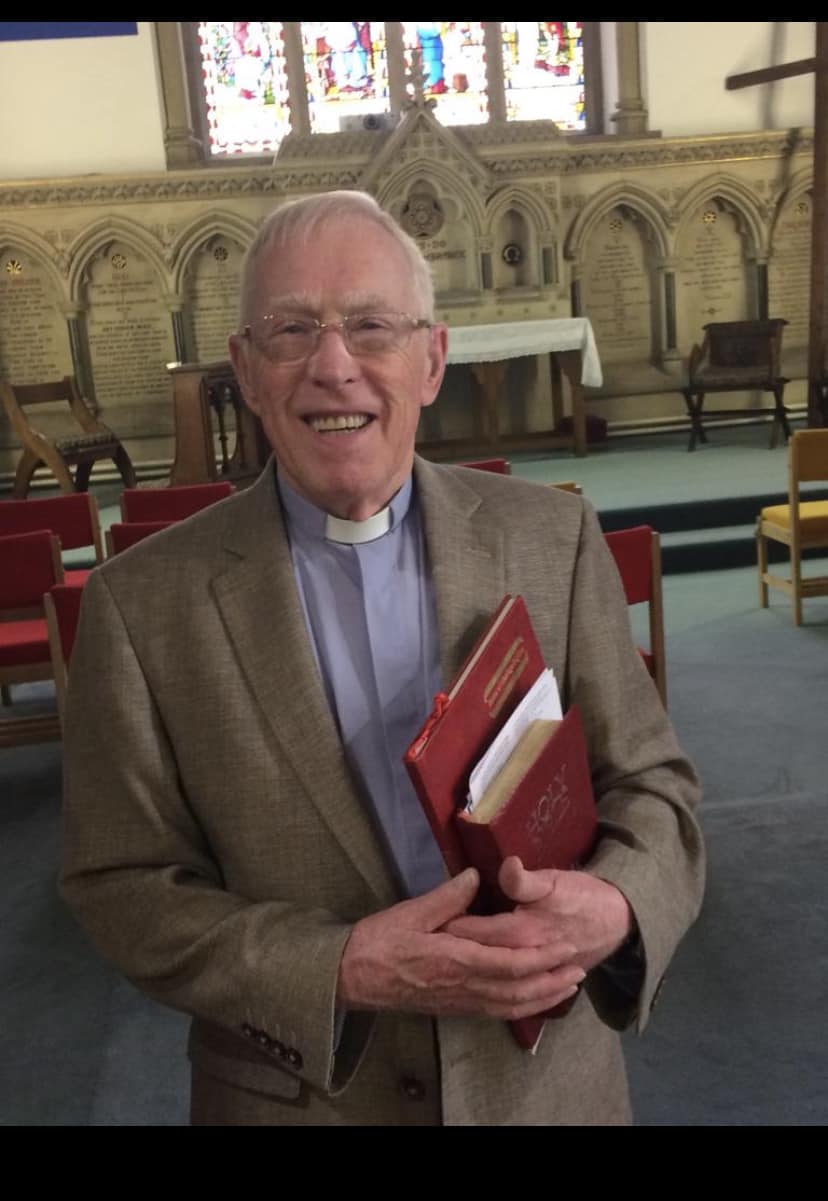
What’s your story? Maybe you’re more like Ivor Saunders? Ivor was my fellow curate at St Jude’s Wolverhampton in 2004. He didn’t let the disappointment of not becoming a vicar in his 20s define him. Instead he was ordained in his 60s to serve the church he had already ministered in since his teenage years. He modeled a steady walk with the Lord that just grew year by year. A wonderful counterpart to a 26 year old me.
It’s not about how dramatic it is. It’s about the Spirit’s work in you. You may have had wonderful experiences, dramatic journeys, deep repentances. You may have faithfully walked with God and not needed a spiritual showground rollercoaster to take you briefly to the heights.
I tell my little story partly to trigger you to remember your own but partly also because it touches on the three waves of Renewal that have impacted mainline churches in the UK in the post-WWII era that you may not know much about, but are a key part of your heritage if you’re in the charismatic movement/renewal. Waves that are rapidly becoming history, but are very much part of His-story with us as a contemporary charismatic movement.
These waves are all the after effects of the big (world changing) first wave which was the rise of Pentecostalism. That happened at the beginning of the twentieth century well outside the camp of established churches. It was a gift to the global church God gave firstly to Afro-Americans, and it is really worth reading about William J Seymour and the 1906 Azuza Street revivals if you don’t know/remember the story.
As branches of Pentecostals developed they would ‘tarry’ [which meant ‘wait intently’] for a “Baptism of the Spirit” often ‘travailing in fasting and prayer’ for days until they got the experience. Branches of Pentecostalism exploded around the world as the ‘every member ministry’ philosophy, experience of God’s power, expectation of growth, tendency for new churches to split, and low structural bar to leadership meant that anyone with a passion could start their own church That is a great story in itself, but we pick up the story 50 years later in the UK when an overspill of Pentecostalism began to impact the mainline denominations through people like Dennis Bennett and Arthur Wallis.
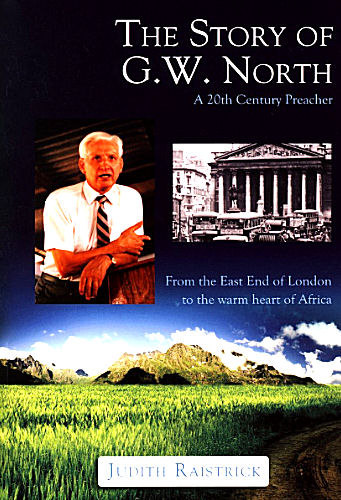
In the late 1950s and early 1960s charismatic pioneers from the USA and UK had given the churches in England a spiritual jumpstart – occasionally with a little too much voltage. By the time I was born in the late 1970s the ‘second wave’ of charismatic renewal ministry was nearly 20 years old. In the late 1970s there were a string of house fellowships around the country sometimes aligned into emergent groups who would ultimately operate a bit like denominations if they outlived their founders. Many of these were made up of people who used to be Baptist, Anglican or Brethren. Our own ‘North’ fellowship has a Baptist + charismatic + holiness (Oswald Chambers/ EM Bounds) root I have never quite understood. It meant we had the Authorised Version and women wore hats in church, we embraced adult ‘believers’ baptism, and healings and miracles. There was a real compassion ministry from the founder GW North who could walk into a ‘mental ward’ and show love to people there until they were free of their bonds, sometimes instantly restored. We also embraced a Welseyan understanding of holiness. His writings can be found here.
Some of the leaders of parallel movements, like the young firebrand Terry Virgo, were restorationists in their theology. They believed that God was going to bypass the old denominations, restore his reign and rule and start again with a newer purer church. It was a time of real excitement in the churches, spiritual growth, renewal, conversions and a sense of rediscovering the New Testament church (both good and bad bits).
But there were others who had carved out a renewal space within denominations like the Church of England. If it cost a lot for some leaders like Colin Urqhuart to leave Anglicanism and start again, it cost even more for some others to stay. Michael Harper, David Watson and others broke some ground within a denomination, but it was a slow and potentially atrophying journey to attempt to change a denomination around. Harper eventually left. Watson died early.
The story of Anglican Renewal from the 1960s, has been well covered in Peter Hocken’s Streams of Renewal and James Steven’s summary chapter in his study on Charismatic Worship.[1] Graham Smith adds helpful analysis relevant to the story of HTB in his study of spiritual warfare within Anglican Charismatic Renewal.[2] All see the stirrings into renewal of some of the curates at All Souls Langham Place as particularly important for imbedding renewal among ‘Oxbridge [Iwerne] men who were “Anglican to their bones”’ thus rooting the charismatic movement into the Church of England.[3]
Reports of the state of renewal by 1980 are varied. There are indications renewal may have reached its zenith in the mid- 1970s as barriers blurred with other forms of spiritual practice around it.[4] It can be seen as a part of an international ‘Second Wave’ of the Holy Spirit in the 20th Century, following the rise of Pentecostalism and pre-dating the ‘Third Wave’ associated with John Wimber. Cf. C. Peter Wagner, The Third Wave of the Holy Spirit: Encountering the Power of Signs and Wonders Today Ann Arbor: Servant Publications Vine Books, 1988.
All see the stirrings into renewal of some of the curates at All Souls Langham Place as particularly important for imbedding renewal among ‘Oxbridge [Iwerne] men who were “Anglican to their bones”’ thus rooting the charismatic movement into the Church of England.
Reports of the state of renewal by 1980 are varied. There are indications renewal may have reached its zenith in the mid- 1970s as barriers blurred with other forms of spiritual practice around it. But that is certainly not the whole story. My own organisation, SOMA UK (Sharing of Ministries Abroad) was born out of a charismatic gathering of Bishops at the 1978 Lambeth Conference and an inspirational amount of prayer that went into the planning of this gathering. Tom Smail was a significant writer and theologian. David Watson was still a prominent charismatic Anglican minister and David DuPlessis had recently prayed for a young barrister called Sandy Millar to be filled with the Spirit. Sandy Millar was already busy passing on David Watson’s teaching on the Spirit to fellow ordinands at Cranmer Hall in the mid-1970s. From there he returned to Holy Trinity Brompton as curate of what was still an ‘establishment church’. Holy Trinity was led by a conservative evangelical vicar Raymond Turvey who also open to see the church move in the power of the Spirit. But that was a cross to bear for Turvey and for many other vicars around the country who had been touched by renewal but found themselves up against immovable parish forces.
As late as 1992 the church Nicola and I now serve in Chiswick, London, was almost shut by the Bishop of Kensington. Elements of the congregation of Christ Church Turnham Green couldn’t cope with a more informal monthly family service and the outgoing vicar had said ‘you are crucifying me’ as he flung his keys back to his wardens in a heated vestry discussion. Despite decades of ecumenial renewal there were many intrenched challenges.
So, when in 1980 HTB was looking for a charismatic vicar to work with Sandy and his ‘bright young things’, Sandy truly believed that there were only 3 or 4 charismatic clergymen in England who could do the job. (Sandy’s bright young things were also known as ‘the 5 Nicky’s and Ken’, a group that included future vicar and churchwarden Nicky Gumbel and Ken Costa. They had come down to London after conversions in a Cambridge Mission led by David MacInnes, and this group would form a key part of the backbone of HTB for the next 45 years).
One of those potential HTB vicars was John Collins. Collins was the sort of Level 5 leader his namesake Jim Collins would later write about – the sort who enabled others, including those more talented than himself, to thrive around him. Marked by a deep self-effacing humility these leaders are not often the ‘face of Time Magazine’ but when you trace their impact back you see lasting difference. Collins’ roots were deeply impeded in Anglican Evangelicalism. His father was ‘the last of the Victorian parsons’ and homeschooled him to the age of 13 taking him on parish visits each afternoon. He was converted in the Iwerne camp system in the early days of the Bash Camps and was an organ scholar at Clare College Cambridge. Despite facilitating a rise in modern worship he retained a deep love for ‘proper’ church music right up to his 2023 memorial service (which saw a return of a robed choir to HTB and an organ voluntary)!
I’ll return to Colins’ story throughout this book. For now I just want to mark his roots. Collins had been John Stott’s first senior curate at All Souls Langham Place. Even in his 90s Collins would say that ‘all my theology is Stott’s’. I think this was true save for two things: one was his understanding of spiritual gifts and the second was his interpretation of Romans 6 (‘consider yourself dead to sin’). Collins had such an overwhelming experience of the Spirit on two occasions in quick succession in 1963 that he came away thinking sin cannot possibly coexist with such a filling, and aspired to attain that again. Something similar must have happened to John Wesley on 24 May 1738 when his heart was ‘strangely warmed’ and he sensed the possibility of the collect for purity ‘that we might perfectly love you’ was won from experience.
But all this meant Collins had to fight hard to justify being a charismatic.
Early charismatics did hard graft bible study to justify their experiences to biblically literate contemporaries.
They searched the Scriptures, tested the spirits, learnt to have joy in discovery and sometimes lost their jobs, churches, health, friends for it. Collins was ostracised by his former champions and mentors, but through it all he grew strong. The renewal at the dockers’ church of St Mark’s Gillingham, became the renewal at the rural Dorset church of Canford, and as he took teams around the country he set fires blazing elsewhere, including at HTB some years before he was made vicar.
Wimber:
It was Collins’ HTB along with David Pytches’ St Andrew’s Chorleywood that would be one of the key places in England to receive ‘a fat man trying to find his way to heaven’. John Wimber, was an American former pop-musician who taught Power Healing and Church Planting, and how to grow people through mid-sized communities where everyone gets to play. If 1960s and 1970s renewal in England was often a refreshing stream trickling through the English countryside, the Wimber revolution (known as the ‘Third Wave’ following Pentecostalism and 1960s/70s Renewal), would be a mighty torrent, not always appreciated by some. We’ll pick up more on the gift that Wimber brings when we talk about Power in a later chapter, but for now it is worth clocking that the HTB network, Alpha Course as we know it, New Wine and Soul Survivor would almost certainly not have existed without his influence. Wimber made it fun. He also fundamentally altered liturgical, ecclesiastical and worship patterns in the UK which we will revisit in later chapters.
Toronto Blessing
A final wave – The Toronto Blessing – which roughly spanned 1994-1998 has become the brackish bathwater we charismatics have been swimming in for the past 25 years. There has not been anything comparable since. It was a wave in part rejected by Wimber for excesses, but with much good in it. Among the English it was particularly helpful for those needing emotional healing and the touch of the Father’s love. Upper-middle-class English clergymen and lay people, often the products of a boarding school system or wartime parents, seemed to particularly benefit from it, as wounds from remote relationships with parents were healed by a tangible sense of parental love. It was an experience that coincided with the launch of the Alpha Course on a national/international stage and I will argue remains enshrined in the Holy Spirit weekend/day away, although the teaching obviously predates Toronto. In some ways Toronto propelled churches out into social action (responding to that experience of love), in other ways it accelerated a ‘me-centered’ turn in the Charismatic world. Where the price of entry in the early Wimber years had been ‘I surrender all’, the price of entry post-Toronto was ‘I need love/therapy’. The Spirit was something I could call on whenever I needed a pick-me-up. We’ll explore this more in the next chapter.
And personally…
But I want to finish with my own story from the late 1990s.. I was attending a University Christian Union house party when I met a charismatic undergraduate for whom Sunday church was the highlight of his week as he loved the tangible presence of God so much. That summer I met a passionate worshiper in Hungary. As I moved into newfrontiers (NFI) in 1998 I discovered that this life of worship, moving in gifts of the Spirit and honing abilities to hear from God were the real deal. I prayed, studied, repented, fasted, grew, failed, recommitted, stepped out and wanted to be a history maker, who knew that it was true today that ‘when people prayed cloudless skies would break and Kings and Queens will shake’. I wanted to serve the purpose of God in my generation. I loved the Scriptures. I loved my raw, immature experiences of God. I loved being a charismatic and I knew that what we had – Toronto, Wimber, Renewal – whatever – had the ability to change the world. I was connected to the power that raised Jesus from the dead – my Father in heaven, working through His Spirit.
If the charismatic movement is a relative baby within church history it is a precious baby indeed. And if at times it behaves like it is a baby/infant still it is surely a deeply loved child of God and one that is well worth nurturing.
Dear friends, let us not chuck out the baby with the bathwater.
—————————————————————–
Next week: The bathwater: in which we are honest about the mess the baby has been swimming in, including the mess that’s still not come to the light. We consider how big dreams, vision and the pressure to sustain a movement has led to the commodification of people through the analogy of Hagar who gave a child to the father of faith who was trying to bring a vision into reality, but was sent into the desert like a lost sheep when she became expendable to Abraham and Sarah.
Read Previous: Foreword | Introduction
ENDNOTES:
[1] Peter Hocken, Streams of Renewal: The Origins and Developments of the Charismatic
Movement in Great Britain. (Carlisle: Paternoster, 1986), 67; James Steven, Worship in the Spirit, 11-37;
[2] Graham Smith, The Church Militant: Spiritual Warfare in the Anglican Charismatic Renewal. (United States: Pickwick Publications, 2016). It can be seen as a part of an international ‘Second Wave’ of the Holy Spirit in the 20th Century, following the rise of Pentecostalism and pre-dating the ‘Third Wave’ associated with John Wimber. Cf. C. Peter Wagner, The Third Wave of the Holy Spirit: Encountering the Power of Signs and Wonders Today Ann Arbor: Servant Publications Vine Books, 1988.
[3] See Hocken, Streams, 78; Smith, The Church Militant, 2016, 31
[4] So whereas Gunstone, Pentecostal Anglicans, 26, see the closing of Fountain Trust as ‘humanely astonishing’, Steven indicates that this is debatable. Andrew Walker suggests Charismatic Renewal had been in decline since the mid-1970s, the dissolution was a symptom of this and the leadership had been marked by increasing tensions, see Stevens, Worship in the Spirit, 23-4; also Andrew Walker, ‘Pentecostal Power: The “Charismatic Renewal Movement” and the politics of Pentecostal Experience’ in E. Barker (ed.) Of Gods and Me; New Religious Movements in the West, 89-108.
 Your name is like honey
Thanks Richard, greatly value your gift of wording this historical narrative – and gifts of perspective and remembering what God has done. And there is more!
LikeLike
very kind, thank you
LikeLike
interesting summary.
I look forward to the next chapter
LikeLike
thank you
LikeLike
Thanks for sharing your story, Richard. It’s also been fascinating to see what has influenced me and the way the Lord takes us from one place to another as he leads and shapes us. Interesting too to read this summary and just see the history of it all. Thx so much
LikeLike